

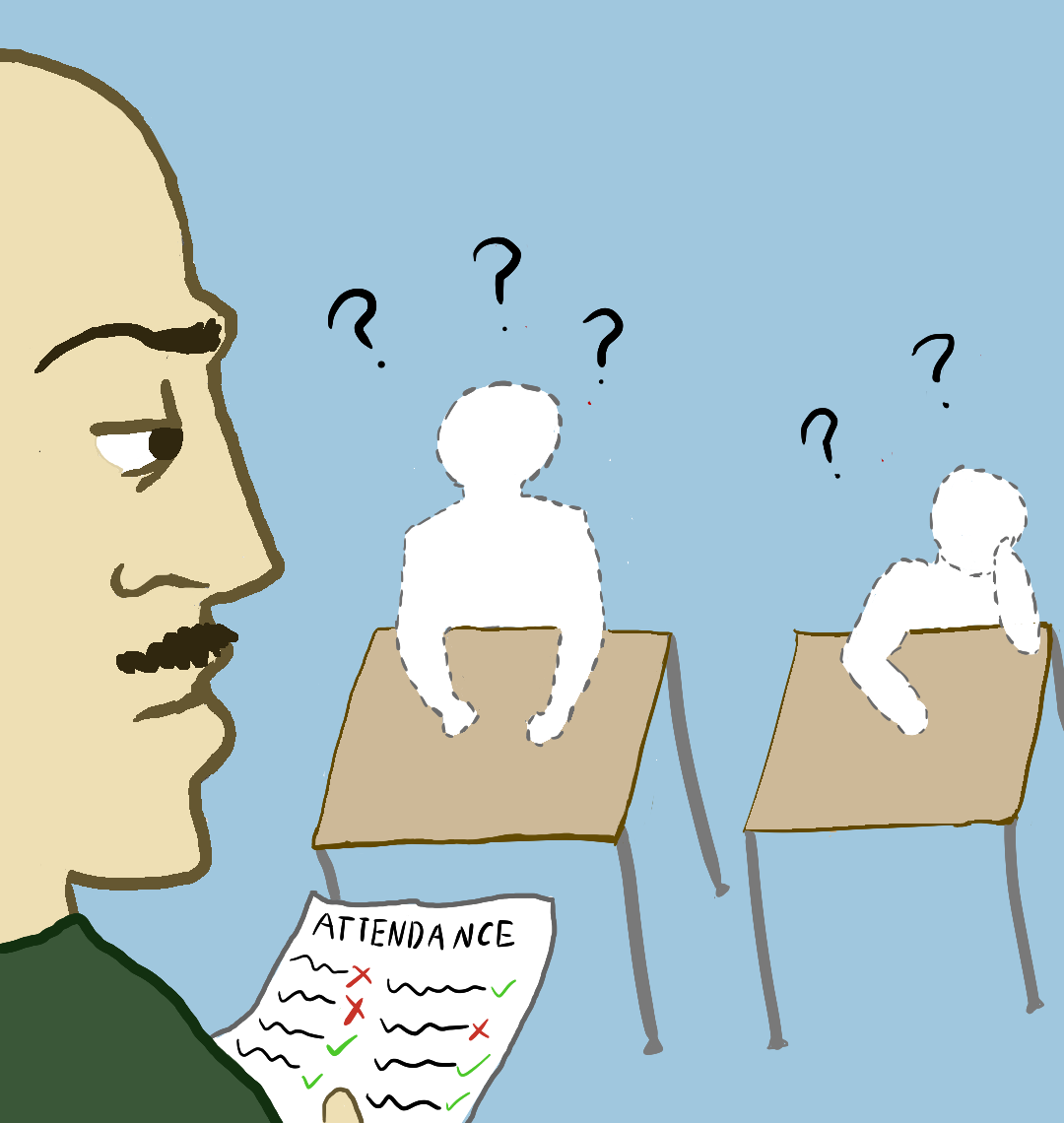
The bell rings at 7:45 a.m., and teachers begin their lessons. One might hope for classes to be full of students who are awake (or semi-awake) and eager to learn. Instead, an average of 50 to 100 students are signing in late with the attendance secretaries in the main office every day, while other students remain at home. With many students racking up tardies and absences, a question arises: How does WJ hold students accountable for their poor attendance?
The school has a strict attendance policy on consistent, unexcused absenteeism designed to keep students in check. The WJHS Attendance Protocol states that after three consecutive unexcused absences, teachers must contact the student’s parents or guardians. After five consecutive unexcused absences, teachers must notify the student’s counselor, administrator and pupil personnel worker to determine how to proceed with the issue. If the support that these staff members provide is ineffective and the student has unexcused absences for 10 consecutive days, the student will be promptly withdrawn from the school.
In many cases, students who chronically miss school are not subject to these repercussions because their parents or guardians fill out the Google attendance form found on the school website. This form excuses the student’s absences or tardiness and therefore protects them from disciplinary measures. However, some students attempt to fill out this form without their parents’ consent or knowledge.
“I usually contact parents if I get too many electronic notes from a specific student, like every morning,” attendance secretary Brittany Ford said. “If notes are submitted by students, they have a student email; we automatically ignore those. If they use one email and I just see it too often, then I’ll call the parents and say ‘hey, looks like they’re pretending.’”
When students are consistently absent or tardy to class, they risk negatively impacting their grades. If the student isn’t present to learn the class’s material, then it can be very difficult for them to keep up with peers and perform well on assessments.
“The [absent students] just don’t learn, and so they aren’t ready for tests,” sophomore Veronica Zhurkin said. “Whatever they miss, they have to spend time outside of school learning it.”
While it is true that many students’ grades suffer from tardiness or absenteeism, many of these students don’t see an issue with being slightly late if it doesn’t affect their overall performance. In many cases, students are not at fault for their tardiness due to familial or personal circumstances.
“My brother drives us to school, and I get up at 7 [a.m.] every day,” sophomore Mackenzie Cho said. “But I always get there five minutes late. It’s not like I’m 30 minutes late.”
Although WJ has already implemented strategies intended to combat absenteeism and tardiness, there are always new ways to improve. Some possible solutions include increasing security measures, editing the attendance form to allow only parents or guardians to access it or returning to the old Loss of Credit policy, which resulted in students receiving an automatic loss of credit in a class if they had five unexcused absences.
“After a certain time, when class starts, they should have administrators, security and anybody else, in a team of three or four, walk down the hallways and conduct a hallway sweep,” school security personnel Freddy Castro said. “Whoever does not have a pass will now have detention.”
Although there will always be some students who attempt to bend the rules without facing consequences, the school has and will continue to provide ways to hold these students accountable for their actions.