Wildcats and the World Cup

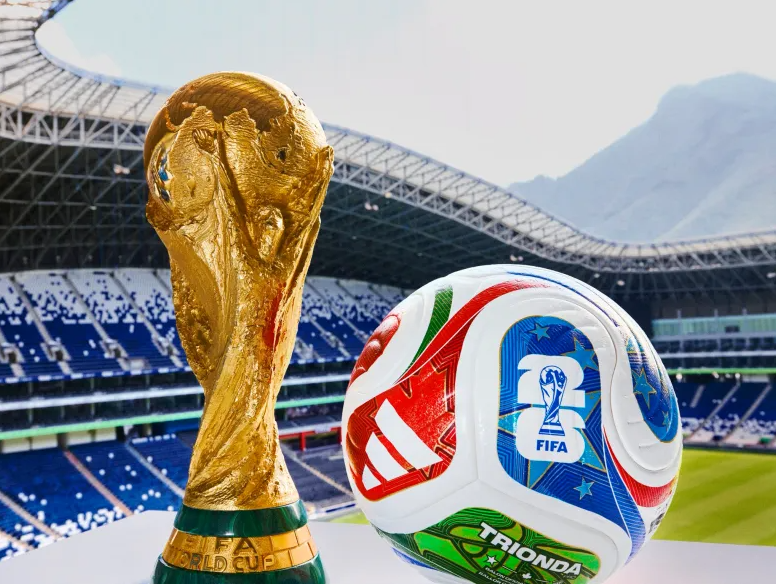
The 2026 FIFA World Cup, co-hosted by the US, Canada and Mexico, is set to be not only the largest World Cup in history but also likely one of the largest, if not the largest, sporting events in history. The tournament has been marred in countless controversies, from everything being outrageously expensive to safety concerns from the Trump administration’s anti-immigration policies. However, the main event will still be the football, or soccer, that will be played at the tournament, beginning with Mexico hosting South Africa on Thursday, June 11.
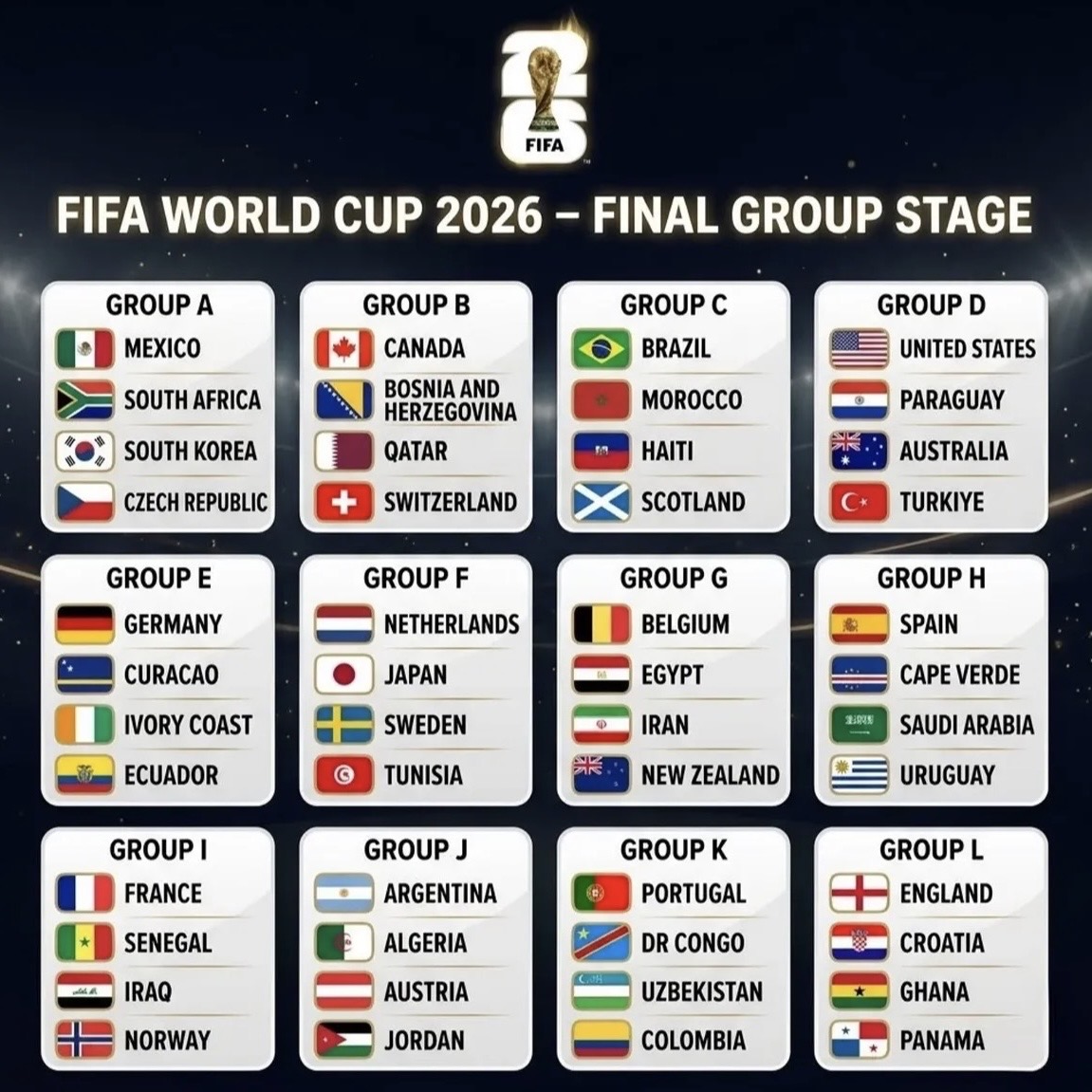
With FIFA expanding the tournament from the traditional 32 teams in eight groups of four to 48 teams in 12 groups of four for the first time, this World Cup is shaping up to be one of the most unpredictable yet, especially in the new 32-team knockout stage. Qualifying for that will be the top two teams in each group, along with the eight best third-placed teams across the groups. The expanded format has resulted in a remarkable diversity of nations from every corner of the globe.
“There’s a lot of new and old players that are coming to their first and last World Cup, so I think this one is actually gonna be really fun and on par with, if not better than, the best ones,” senior Iramis Rosario Miller said. “Unfortunately, my country—the Dominican Republic—isn’t being represented, but there’s still a lot of other teams that are, and I think that’s the whole point of the World Cup.”
The expanded format has resulted in a remarkable diversity of nations from literally every corner of the globe. Tournament favorites like Argentina, Spain, England and France will be going up against smaller “minnow” nations such as Cape Verde, Curaçao, Haiti and more, many of whom are playing in their first ever World Cup.
“It’s kind of proven that the higher ranked teams still get through the group stage most of the time,” PE soccer teacher and flag football coach Gladwin Worden said. “Just like college football and even the [UEFA] Champions League, you’re gonna have these teams that have no business being in the tournament. Those teams usually weed themselves out and never quite make it, so I think you’ll see a lot of easy games from the get-go.”
While most would still bet on the traditional giants to defeat smaller or less experienced teams—either head-to-head or in their groups’ standings—World Cup upsets are nothing new, and we could get some of the craziest ones ever.
Although some groups will be relatively predictable and smaller nations may not stand a chance, the knockout stage will undoubtedly be extremely interesting and unpredictable. Tournament favorites may come up against each other early on, while dark horses like Japan and Morocco could make runs deep into the latter stages, which Morocco did last tournament.
As for the tournament favorites, France arguably has the strongest squad on paper, with a prolific attack featuring arguably a few of the best players in world football right now in Ousmane Dembele, Michael Olise and, of course, Kylian Mbappe. However, Argentina and Lionel Messi will be coming off the back of not just their World Cup triumph in 2022 but also the same in the 2024 Copa America, also hosted in the US. Challenging him will, of course, be Cristiano Ronaldo and Portugal, who again have a very strong squad, especially in their midfield.
“I have Portugal winning the World Cup because they have a lot of good players coming up right now. It’s not any bias for Ronaldo or anything like that,” senior Iramis Rosario Miller said. “For example, Vitinha and Joao Neves just won back-to-back Champions Leagues, and they’re insane right now. I think Vitinha could actually win the golden ball for player of the tournament because he’s up there with the best Portuguese players. He just carries the team on his back, dictates what happens and the team kind of runs around him.”
Coming off the back of winning the 2024 Euros, Spain has a squad with both experienced players like previous Ballon d’Or winner Rodri, as well as talented, dynamic young players in Lamine Yamal and Pedri. The Netherlands also have a similar dynamic, but they are still yet to triumph in the World Cup despite having played in three finals.
“I think Yamal would’ve been one of the names to throw in the hat for the golden ball if he didn’t get injured,” Worden said. “I think Spain could still win the World Cup even though he won’t be there for the first round.”
While Brazil has won the tournament the most times in history, five to be exact, their squad, except wingers Vinicius Junior and Raphinha, is not at the peak of its powers.
“They’re dealing with a lot of issues right now,” Miller said. ”Vinicius has been pretty inconsistent, and [Willian] Estêvão and Rodrygo are gonna miss the World Cup. If they played in the World Cup, they would actually take them pretty far, but they’re injured. Brazil have so many players out injured that I don’t think they’re going to get out of the group stage.
England, however, is dealing with the opposite predicament; they, like France, have a strong squad on paper, as well as a new manager with a proven track record in Thomas Tuchel, who has admittedly made many controversial picks for the squad he’ll be taking to the tournament. However, they’ve failed to turn up in the final stages of their last few international tournaments, losing in the final of the past two Euros.
Italy remarkably failed to qualify for a third World Cup in a row, and Germany could be a contender, but they’ve disappointingly gone out in the group stage in each of the last two World Cups.
“No Asian or African country has ever won the World Cup, and it’s dominated by European teams and South American teams, so you’d be safe to say one of them will win it,” Worden said.
As with every World Cup but even more so with this summer’s installment, it’s anyone’s guess as to not only who could emerge as victors but also any unexpected teams or players who could put on a showing and make an impact. Dark horses have been perennial features of World Cups, but a glance at the nations participating assures that this tournament is bound to have at least one or two.
“Turkey was my dark horse choice for the Euros, and they ended up being exactly that,” Miller said. “So, I think they’ll do it again at the World Cup.”
Although home advantage may assist the host nations, especially Mexico, none are really strong enough to seriously challenge the best of the best teams in Europe. Mexico are not in good form and don’t have a great squad, and even though the US and Canada have a decent amount of players playing in Europe’s top leagues, their squads still don’t stack up against tournament favorites.
“To be a US soccer fan is knowing that you’re eventually gonna crash,” Worden said. “It’s all exciting and everything, but to win it all, I don’t think the US has any hope.”
Despite the tournament being hosted in over 16 cities across the US, Mexico, and Canada—not to mention the draw for the tournament happening at the Kennedy Center in DC in December—none of the 104 games are being hosted in the DMV or even the Baltimore region. Both FedEx Field in Landover, MD, home to the Washington Commanders, and M&T Bank Field in Baltimore, MD, home to the Baltimore Ravens, were rejected by FIFA for failing to meet their standards. The closest games to WJ are being held three hours away at the Eagles’ Lincoln Financial Field in Philadelphia, PA.
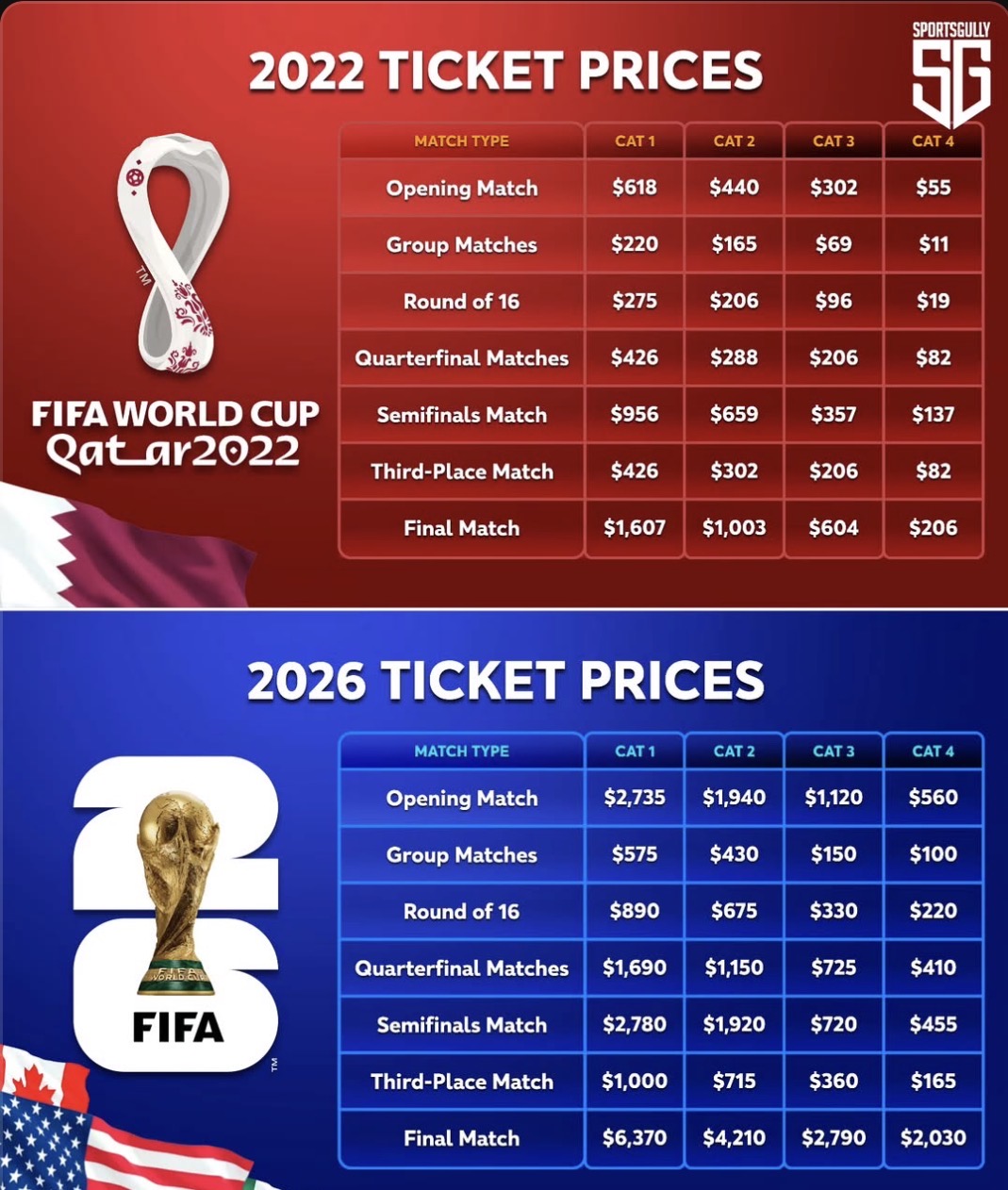
“My family and I are going to drive up to Philly for the Croatia versus Senegal game,” sophomore Jehan Weerasinghe said. “The tickets cost $600 each, so $2400 in total for four of us, and we’re in the third highest section. It’s honestly not that bad in the grand scheme of ticket prices at this World Cup, because the worst seats for the final are like $17,000.”
However, the real deterrents for people—including WJ students—who want to go to World Cup games this summer are the outrageously high prices of not just tickets to games but also transportation, lodging and other amenities. As for match tickets specifically, FIFA’s new “dynamic pricing” system—where the price of tickets is based on the amount of demand for them—has made this summer’s installment of the tournament, which is supposed to be for fans everywhere, rich or poor, by far the most expensive in history. Prices for even what would seemingly be low-demand group stage matches have surged into the hundreds of dollars for seats in the nosebleeds of massive NFL stadiums.
“I’ll probably watch all the games at home on TV, and if I had to actually pay for a ticket, I probably wouldn’t go,” Worden said. “It would be great and I’ve actually had some offers to go see some games, but I’m not going to any. No matter where you sit, it’s kind of hard to see the whole game, and you miss all the close-ups.”
Making this problem even worse are scalpers, who have robots programmed to buy large quantities of tickets as soon as they are put up for sale and then resell them for extraordinarily high prices to fans. While other countries like the UK have laws specifically to protect against this, the US and FIFA have introduced no such legislation, leaving ticket prices uncapped and unregulated. Combined with already high base ticket prices set by FIFA, ticket prices for any game are at a minimum of three digits, if not four or even more for games like the final.
“I considered buying tickets, but the World Cup’s going to be running throughout beach week, so I would honestly just prefer going over to a house with a bunch of friends and watching a game rather than splurging a lot of money on a World Cup ticket,” Miller said.
Despite the diversity on paper, all of these factors could be setting up some of the most lifeless in-stadium atmospheres at a World Cup that we’ve ever seen, as the real passionate fans are being priced out or just straight up banned from attending games. This will leave the people who can afford tickets as the only ones able to attend, some of whom may not even have seen a football match in their lives, let alone know how to create an atmosphere for the match and tournament as a whole.
“I think the expensive ticket prices are gonna make the atmosphere a lot worse,” Miller said. “Most of the people that are gonna be at the games only watch soccer when the World Cup is on and don’t watch anything like the Champions League in between. Unless they can maybe rack up some money to save for a ticket, most of the die-hard fans and people that are really there to support their countries are, unfortunately, just gonna be watching at home.”
However, all of this is without addressing the elephant in the room that is the globe; the Trump administration’s policies—whether it be domestically with immigration enforcement or internationally with tariffs, threatening to annex Greenland (which is a part of Denmark), travel restrictions and the war in Iran (who have threatened to withdraw from playing in the tournament entirely)—have shrouded the tournament in controversy.
However, FIFA and the Trump administration do not exist in isolation; FIFA president Gianni Infantino literally invented and presented the “FIFA Peace Prize” award to Donald Trump at the draw in DC in December. Just like with Russia in 2018 and Qatar in 2022, the 2026 World Cup can basically be seen as a huge sportswashing and propaganda machine to make the US and Trump look better on the world stage than they really are.
“Our president will probably say something against FIFA and why people aren’t paying their part of the whole deal,” Worden said. ”Politics will definitely be involved to at least a small extent, and they might have an impact on the tournament security wise, but I don’t know if they will have a bearing on the schedule or how games get handled. But, other than that, ultimately, athletes are athletes, and they just want to play.”
Along with existing safety and security concerns from the US’s lack of gun control, the Trump administration has confirmed that ICE agents will be present at the World Cup and could target matches. Given the agency’s recent history of racial profiling, reported human rights abuses, anonymity and use of force and violence, this could be extremely problematic, especially for the large number of supporters who might be traveling from Latin American countries.
“I think current events and politics will 100% impact the tournament,” Miller said. “There were a whole bunch of issues with politics and stuff like that at the Copa America two years ago. I think ICE is also gonna be staying outside stadiums at the games a lot. They did the same thing with the Super Bowl, so obviously they’ll do it at the World Cup.”
The administration’s travel bans will specifically prohibit fans from Iran, Haiti, Senegal and the Ivory Coast from attending. Haiti has just qualified for their first World Cup in half a century in the midst of a civil war that had them play their qualifiers outside their own borders, and their players might not be able to legally travel to the US to play in the tournament under these restrictions. Moreover, Haitian fans are being stripped of a once-in-a-lifetime opportunity to support their team on the global stage.
Senegal and the Ivory Coast also have passionate supporters and teams that are not to be taken lightly; Senegal just recently technically won but were controversially stripped of their victory in the African Cup of Nations, which the Ivory Coast won in 2023. With all this being said, fans should never have to be fearing for their own safety let alone be banned from attending World Cup matches. The current political environment, at least in the US, is making this World Cup very hostile and intimidating, when it’s supposed to be inclusive and unifying.
“I’m a little nervous about the World Cup being hosted in this country with all the security issues, and obviously you got some wars going on,” Worden said. “There’s just so much money you have to have to hire that many security people, and even then, they have to be knowledgeable security people. I don’t know if there’s gonna be actual physical interaction between groups, but there’s definitely going to be protests.”
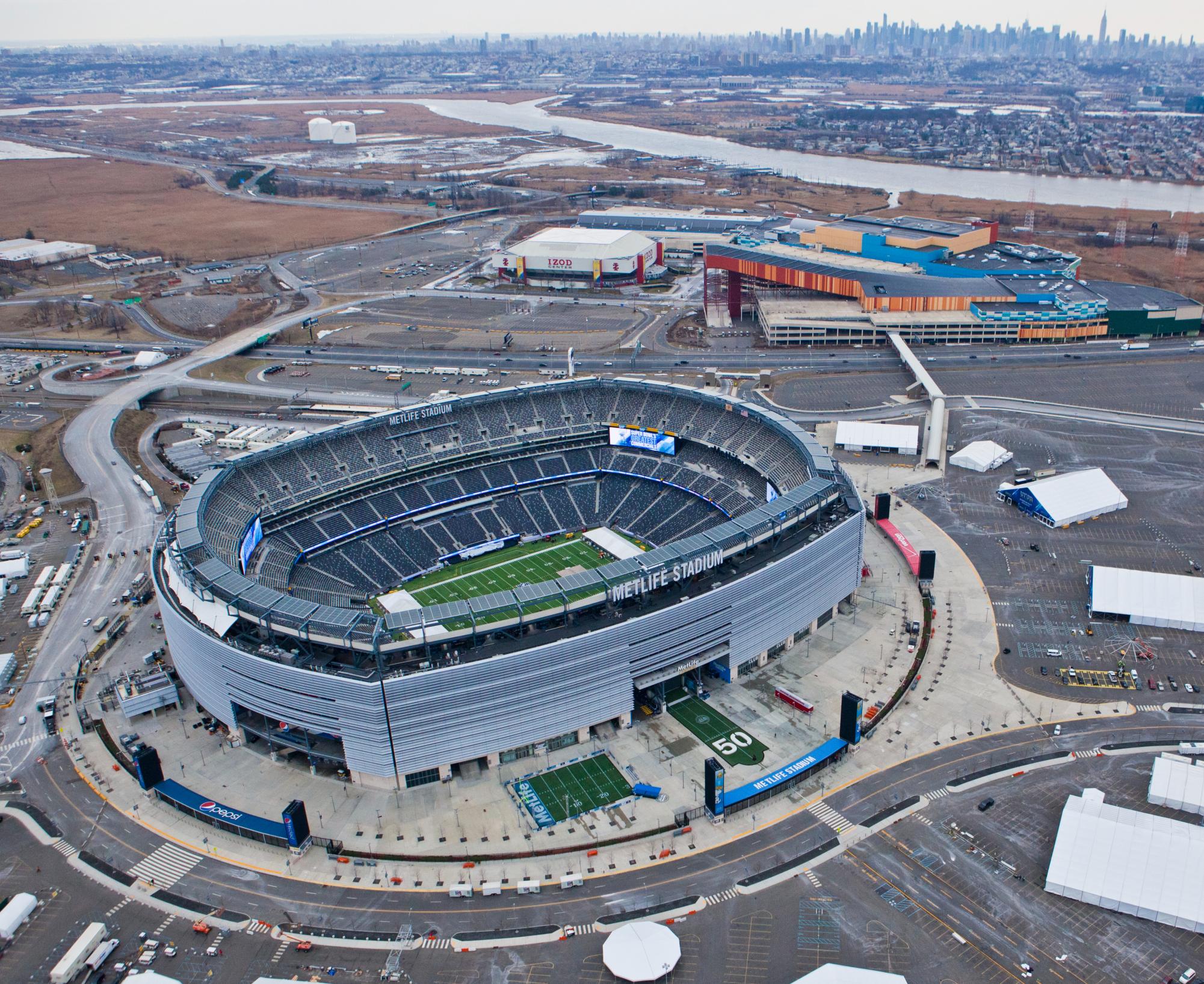
Problems have also arisen with transportation and hotels. Driving to games is being discouraged through high parking fees and even banned at some stadiums in a country notorious for its car-centrism and lack of public transportation. However, even in the places that have and are offering trains and buses to and from games, such as New York, controversies like NJ Transit charging over $100 just for a train ticket to MetLife Stadium outside of the city certainly don’t help the US’s cause for attempting to remedy that reputation.
While host cities have come under fire for their handling of the tournament, the real blame should be directed towards the organizing body. Despite their performative attempts to try to seem like they care about fans, such as offering $60 tickets in very limited quantities, FIFA—who are supposedly a non-profit organization—has chosen to put profit, greed and financial extraction above fan experience and tournament atmosphere. Those $100 train tickets being charged by NJ Transit are due in part to FIFA refusing to cover transportation costs for the New York region, among others.
Speaking of this, FIFA and some host cities are also charging supporters to enter Fan Zones, which will occupy parking lots at many stadiums, as well as some Fan Fests, which will happen in downtowns of many cities, both of which have been free at previous World Cups. On top of this, because of their legal status as a non-profit, FIFA don’t have to pay taxes, meaning that host cities will lose out on millions of dollars that they could have gotten from sales taxes on tickets, despite FIFA already taking a large cut of the revenue from ticket sales directly. FIFA also has a monopoly on all commercial revenue made from the World Cup, meaning that cities can’t even organize deals with sponsors to help reduce the deficits they will be taking on from hosting.
These are just a handful of many prominent examples of FIFA not just neglecting but actively worsening the experience for fans who just want to be able to see and support their teams without fearing for their safety or financial situation. Football has always been a sport for the working class and even the poor, but things are unfortunately trending in the other direction, and there’s little sign of hope when the sport’s governing body is quite literally making games only accessible to the ultra-wealthy. At its core, this World Cup is really just a cash grab for FIFA above all else, as well as a political tool for Trump to distract America and the world from larger political and societal issues at play.
Nevertheless, it’s not all doom and gloom for this summer’s World Cup. Hopefully, fans, players and the world can show out and come together to defy divisions and make the tournament exciting, lively and memorable. After all, the core purpose of the World Cup and any international sporting event, for that matter, is to bring people together and unite them, and in the face of division, this World Cup has the power to do exactly that.
-
Isra Abbasi (12): Winner – France | Runner-up – Spain | Golden boot (top scorer) – Messi | Golden ball (best player) – Messi | Dark horse – Turkey | Out in group stage – USA

-
Sahara Gollance (10): Winner – France | Runner-up – Argentina | Golden boot (top scorer) – Messi | Golden ball (best player) – Kane | Dark horse – Japan

-
Iramis Rosario Miller (12): Winner – Portugal | Runner-up – Spain | Golden boot (top scorer) – Dembele | Golden ball (best player) – Vitinha | Dark horse – Turkey | Out in group stage – Brazil

-
Martino Castro Cillis (11): Winner – Argentina | Runner-up – France | Golden boot (top scorer) – Mbappe | Golden ball (best player) – Messi | Dark horse – Japan | Out in group stage – Turkey

-
Sophie Pyott (12): Winner – Argentina | Runner-up – Spain | Golden boot (top scorer) – Mbappe | Golden ball (best player) – Messi | Dark horse – Saudi Arabia | Out in group stage – USA

-
Gladwin Worden: Winner – Spain | Runner-up – France | Golden boot (top scorer) – Rashford | Golden ball (best player) – Mbappe | Dark horse – Morocco | Out in group stage – England







Your donation will support the student journalists of Walter Johnson High School. Your contribution will allow us to purchase equipment and cover our annual website hosting costs.