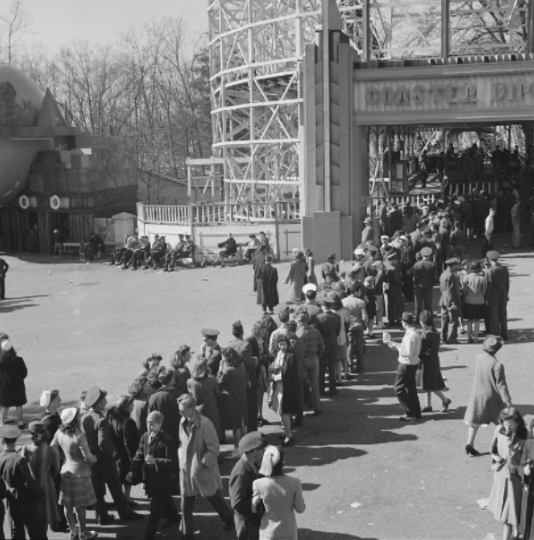
Every day, families, campers, and artists arrive at Glen Echo Park, whether for a fun day outside or to pursue their artistic endeavors, in the heart of a park rich in history. Visitors walk through the grounds that once held an amusement park, where desegregation protests once took place during the civil rights movement. The complete history is unknown to Washingtonians, inspiring the question: though the area isn’t as exciting and important as it was decades ago, how essential is its history, and is Glen Echo Park still considered worth visiting?
The 516 acres of land that we now know as Glen Echo Park were originally purchased by Edwin and Edward Baltzley in 1888, who made it into a National Chautauqua assembly National Chautauqua assemblies were a social and educational movement that originated in New York, known for hosting programs, music, drama, and more for rural Americans.
When an alleged malaria outbreak halted the large number of visitors the park once had, the Baltzley brothers developed financial issues, resulting in the Washington Railway and Electric Company purchasing the land from them in 1911. The park was then renovated for the future amusement park that would be established, and the iconic carousel was later installed in 1921.
Glen Echo Amusement Park was thriving. Swing bands performed in the Spanish ballroom during the WWII era, the Crystal Pool opened, and visitors were happy, until the park’s segregation laws began to be challenged when the Civil Rights Movement took off in the 1960s.
On Jun. 30, 1960, a group of Howard University students organized a protest, forever changing Glen Echo. The students, black and white, called themselves the “Non-violent Action Group” (NAG) and protested segregation at various restaurants, department stores, and other segregated facilities when they decided to go to Glen Echo Park.
Laurence Henry, one of the Howard University students, participated in a sit-in, where they sat in the carousel and confronted the security of the park. In an interview from National Park Service.gov, between Laurence Henry and Frank Collins during the sit-in, Henry asks about the strict rules of the park.
“Just what class of people do you allow to come in here?” Henry asked.
“White people,” Collins said.
“So you’re saying you exclude the American negro?
“That’s right.”
“Who is a citizen of the United States?”
“That’s right.”
“I see,” Henry said.
Laurence Henry and the other two dozen protestors gained traction that day, and they continued to protest with others who joined later on until they officially succeeded in 1961 when the park was forced to desegregate due to the great support from various groups.
As more modern amusement parks like Disneyland gained more attention and began competition, the Park began to lose its spark. Its structures began to decay, vandalism took place, social unrest due to the desegregation of the park caused less visitation, and financial instability eventually led to the closing of Glen Echo Amusement Park for good.
The National Park Service took over in 1971, resulting in the arts and cultural Glen Echo Park we know today, hosting summer camps, concerts, events, and the carousel, with the same original antique hand-carved horses that were restored from the 1980s to 2000s.
According to a recent poll, about 60% of teenagers in Montgomery County can confidently say that they think Glen Echo Park is still worth visiting, suggesting it remains important to a good amount of the community, but why are several unsure?
Freshman Elly Metcalfe recalls spending time at Glen Echo Park during the summer.
“I visited Glen Echo last when volunteering at a summer camp there for SSL,” Metcalfe said.
The park offers an abundance of SSL opportunities, whether it’s putting away chairs after an event in the ballroom or volunteering as a counselor for one of the variety of summer camps Glen Echo has to offer.
Volunteering at the park could be an insightful experience for those who want to be a real counselor in the future, but can only be one for community service hours.
“I helped younger kids make art at the summer camp,” freshman Camila Caraig said.
“It’s cool to see how history ties to current events and how it affects how things are today,” Metcalfe said. “It’s also crazy to think about the history of the buildings at the park because they are still there.”
The carousel seems to attract the most attention as it holds the most historic value.
“The carousel still works, and you are still able to ride on it, and knowing the history makes it a cool experience,” Metcalfe said.
Glen Echo Park’s intricate history shows how a place’s past can influence the future and invite a new group of people to understand history and appreciate it.
“Learning about history can help us appreciate all that has happened and learn from it,” Metcalfe said.