
“Hey freshman, get over here!”
You look over your shoulder to see a senior boy, dressed in green, sprinting towards you at full speed as you head to your next class. You’re a target, and will receive a big “F” on your forehead in Sharpie if you get caught, so you start running. While this may not happen anymore, these hazing rituals were commonplace in the halls of WJ years ago. But what happened?
Dating all the way back to 1969, “Sophomore Sing Day” was an upperclassman favorite. Based around the old Spartan plaque near the cafeteria, any juniors and seniors could grab an unlucky sophomore who was walking nearby and force them to sing the WJ Fight Song.
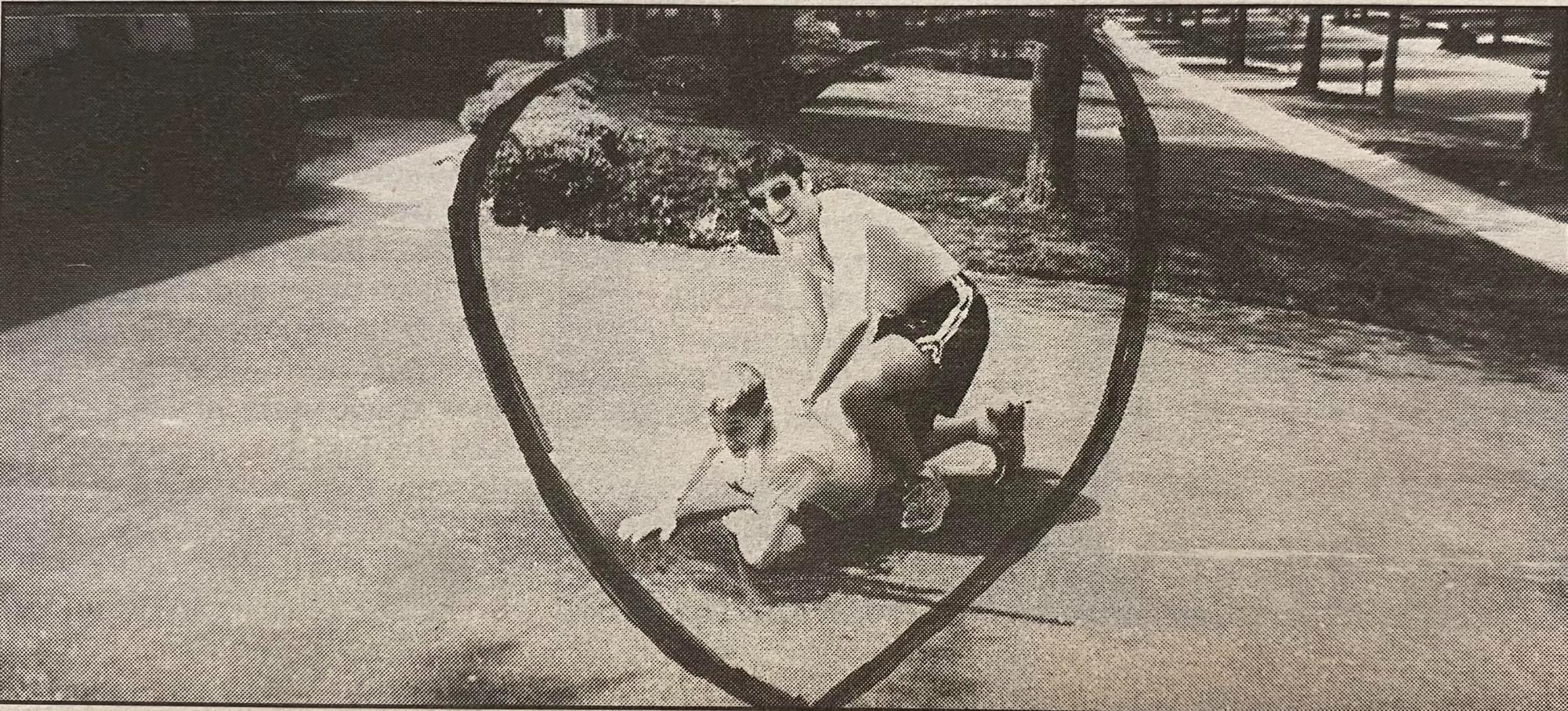
“Sophomores with older siblings often were a particular target, either by their family members or their friends, who took pleasure in tormenting the younger students,” 1972 alum Susan Phillips said. “In addition to having to sing, upperclassmen could force sophomores on hands and knees to scrub the plaque with a toothbrush.”
While Sophomore Sing day was supposedly outlawed by administration, these hazing traditions persisted. In 1997, being forced by an upperclassman to sing in the middle of the hallway a song like, “I’m a Little Teapot,” or “Happy Birthday,” was also a common punishment for being an unsuspecting underclassman loitering in the halls.
In 1999, in an effort to bring back long-established senior superiority, the summer before their senior year, the class of 2000 committed a large-scale water balloon attack on Tilden Middle School to assert dominance over the incoming freshman. By pelting them with water balloons on school property and proceeding to follow them to their bus stops, the senior class made sure to spread the message of “Don’t Mess with the Seniors.”
Just 20 years ago, the class of 2006 kept their own traditions alive by adding their own touch, in Sharpie, to the freshmen on “Freshman Fridays.”
“When I was a freshman, people would race after you and take a Sharpie and draw Fs all over you,” class of 2010 alum Elizabeth Jung said. “Once, one of my friends even glitterbombed me on Freshman Friday and I didn’t even realize until I got to my next class.”
Many of these practices were even encouraged by administration at the time. Whether it involved looking the other way when a freshman was singing or only lightly implying the need to “stop hazing,” it wasn’t meant to be effective. But now, our administration imposes strict anti-hazing or harassment rules to keep students in line.
Sophomore Ashlyn McCullough on the girls’ varsity soccer stated that she had never experienced any hazing or negative “community” tradition during her time at WJ. During the fall pep rally, administration even prohibited the use of different costumes for the girls’ varsity soccer team, specifically dressing up the freshmen as Gargamel for the “Smurfs” theme.
“I don’t think it’s hazing because every grade is different, and the freshmen are okay with it,” McCullough said. “It’s just unfortunate because that was a team bonding event that was prevented.”
Other WJ athletes have had similar experiences. Senior Zoe McGee, captain of the WJ swim and dive team, said she has also never been forced to do something as part of the team bonding.
But why is this the case? What caused the serious change in attitude towards hazing at WJ? The reality is, it’s a mixture of multiple smaller incidents that have made administration see the negative consequences of continuing traditions like Sophomore Sing Day or Freshman Fridays. For some students, these jokes seem harmless and are just a small price of embarrassment to pay in return for getting to wreak havoc on the next generation. For others, though, it is their worst nightmare.
For Sophomore Sing Day, the principal at the time reported that some students were so worried about being asked to sing that they avoided school on those days completely.
“As you can imagine, there were some violent incidents and fights between sophomores defending themselves and persecutors determined to inflict the same humiliation that they had to endure in previous years,” Phillips said. “One kid got his arm broken in a fight, and I think the ‘tradition’ was stopped.”
In addition, in 2006, administration seemed to be cracking down on the Freshmen Fridays, largely attributed to small groups of seniors who took things too far. Writing F’s on students’ faces was swapped with handing out leis and stickers as a way to continue school spirit without public humiliation.
In recent years, events like the 2018 Damascus High School hazing incident that resulted in four football players being charged with sexual assault have also forced administrators to be vigilant about any potentially harmful or dangerous habits in the community.
But, it can be difficult to know what constitutes harmful. People have different opinions about what is “too far” and what they feel comfortable doing, which is why it’s difficult to make concrete rules about hazing.
“If it’s just everyone doing a different thing, it’s supposed to be fun and you’re not trying to make anyone feel bad, I think it’s just teambuilding,” McGee said. “Sometimes it can be hard to interpret the difference between teambuilding and hazing though.”