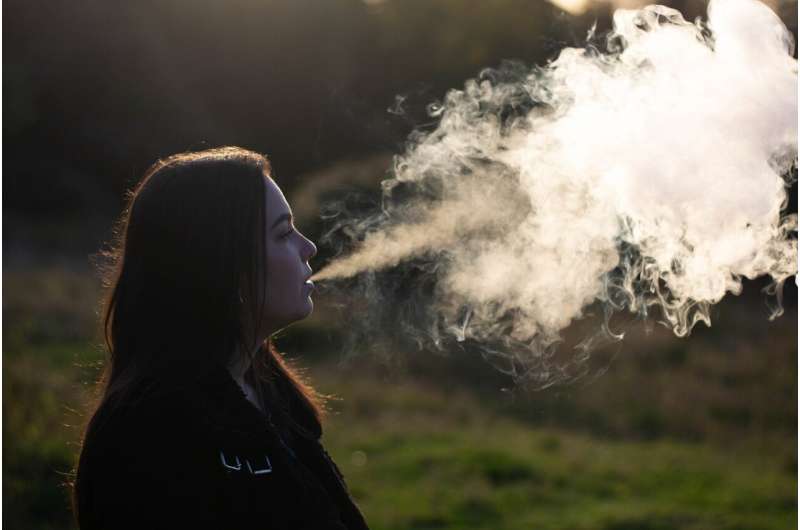
From smoking lounges to coveted vaping sessions in the handicapped stall, field parties to supervised basement functions and overt displays of rebellious activities to carefully disguising red eyes and dry mouths, Walter Johnson has seen it all. Since its opening, this school has undergone drastic changes.
Talking about underage drinking, smoking or other illicit behaviors is now widely considered taboo. However, it wasn’t always like this. Decades ago, smoking used to be so normalized that WJ even had designated smoking areas for both students and teachers. Nevertheless, in 1968, MCPS banned smoking on school property. This drove students to congregate in hidden nooks and other unsupervised locations, most commonly being the school bathrooms. This consequently resulted in behaviors such as vandalism and drug dealing, leading to the temporary closure of school restrooms. Sound familiar?
“Bathrooms had clouds of smoke, and nobody thought twice,” class of 1971 graduate Barbara Snapp said.
The same cycle continues today, only the substance has changed. Cigarettes have been replaced by vapes, which are easier to hide and harder to detect.
“When you go to the bathroom, I see kids smoking vapes [and] carts,” an anonymous student said. A junior described how there always seems to be “five girls in the big stall and most of the time, one of them is probably vaping, or just they finished vaping.”
In response, MCPS installed vape detectors in the school bathrooms, marking a big shift from teacher-led discipline to more technological measures. Student opinion, however, is mixed on their effectiveness.
“Even when I see them [detectors] go off, there’s nothing that really happens. Maybe the security guard will come and ask everybody to go in the bathroom, but I don’t think that’s enough to stop kids from vaping,” an anonymous senior said. “When there’s a will, there’s a way.”
Another student acknowledged that detectors have been able to slightly alter behavior, explaining how students are now being “mindful of how much they do it and where they do it,” but added that the consequences are hardly strong enough to stop it entirely.
Vape detectors aren’t the only marker of cultural evolution either. Over the years, substance abuse has also increased, oftentimes leading to overdoses or other life-threatening consequences on school property. This had led Montgomery County to implement precautionary measures in the event of an emergency. More specifically, the opioid blocker medication, naloxone, also known as Narcan, is in the process of being implemented into every high school in MCPS as a safety measure. Teachers and other staff members are encouraged to learn how to administer this medication in case of a crisis in addition to the school nurses.
“It’s an emergency response, and the first thing that you could do before emergency responders come. It’s super useful because anyone can use it and it’s super easy to use,” junior class president Reemey Ghermay said. “All you do is put it to the person’s nose, it’s kind of like a nasal spray type of thing. It’s also pretty small, so you can carry it anywhere.”
Although Narcan has been around for several years, 2024-2025 SMOB Praneel Suvarna’s campaign had a main focus on making the spray more accessible. This has, in turn, enhanced safety in WJ and MCPS as a whole.
While vaping has become the most popular substance on school grounds, alcohol follows a similar trajectory. Like smoking, underage drinking isn’t discussed openly, yet it is widely normalized. By freshman year, alcohol is introduced to high school social lives, and by sophomore year, its presence becomes routine.
Alongside this normalization comes the rise of fake IDs. An idea that, despite its modern feel, has been around for decades. In 1982, the Pitch publication had already shown that students were using fake identification long before today’s digitally made cards. Often facing legal consequences such as fines or license suspension.
“Listen to legal age limit? Absolutely not! Driver’s licenses did not have pictures on them back then. Plus, few bars actually checked IDs, or if they did, it was a cursory glance,” Snapp said.
Today, fake IDs have become almost a rite of passage. Students report that peers at school sell ID cards for anywhere between “ $40 to $100”, transforming what was once seen as risky into a norm. Fake IDs have become an expected part of teenage social life. Further blurring the line between what is legal and socially acceptable.
Party culture has also been shifted alongside this change. In the past, gatherings often took place in wooded areas or isolated fields to emphasize caution and to avoid the risk of being caught. Now, these spaces have been replaced by what students call “functions”, which are parties hosted in basements or backyards. Even in some cases, parents are present or supervising, showing a shift from maximum concealment to a more controlled acceptance.