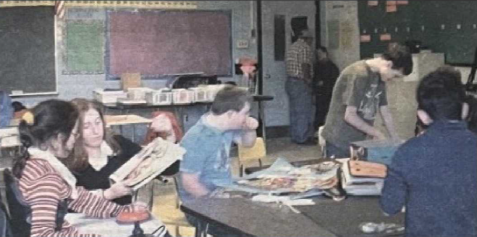
Special Education Programs have been an important part of WJ’s history. From its early development to its expansion, adding Special Ed Programs such as Best Buddies and Learning for Independence (LFI) focus on providing support to students with disabilities while aiming to promote their inclusion within WJ’s community.
Montgomery County began developing special education programs in 1972, with the establishment of the Special Education Committee (SEAC). This was a major step in trying to make education more equitable coming after the passage of the Rehabilitation Act by Congress in 1973 that put provisions in place to further protect people with disabilities. Prior to this, many kids with disabilities were excluded from educational programs.
SEAC is still active today and has a list of purposes which include advising schools’ special education programs in the county, participating in the development of the most updated strategies (regarding children with special needs), submitting reports while interacting with school administrations and analyzing the curriculum.
WJ has advanced its programs with the assistance of the county committee. It has developed alongside legislation that MCPS enforces, trying to make sure every support service is available to those who need it.
Addition of LFI:
The LFI program was introduced in 1978 by the Department of Special Education, alongside a similar program at Tilden Middle School that same year. It was founded as a way to engage students with disabilities in a learning environment. Students with many different disabilities have been with the program and in turn received benefits from it. Students may not share the same experiences due to their personalized needs; however, LFI makes sure they’re included within WJ’s diverse school environment.
“They’re not all gonna get the same experience, but they’re all gonna get an experience that best fits each individual person.” LFI teacher Steve Sutherland said. “Some students are able to do more than other students in some areas, and there’s other students who might do more in other areas than that same student.”
Though the county establishes general program requirements and support, school departments and their staff have to adapt and implement the actual curriculum. In 2012, using a Promethean Board for teaching was considered a modern technology assistant quite helpful in teaching kids with disabilities. The technology now, compared to 2012, has changed immensely and its developments have greatly benefited the LFI program. Technology and communication have been made significantly easier, allowing the staff to dedicate the appropriate amount of time to each student in need, understanding all of the students’ needs.
Individualized Education Programs (IEPs):
When The Education for All Handicapped Children Act of 1975 was renamed the Individuals with Disabilities Act (IDEA), the legal requirements for IEPs became solidified. IEPs are widely used as a way to help students with special needs access curriculum and instruction.
At Walter Johnson, the IEP takes shape in the form of personalized learning plans and objectives for students with disabilities. Students with IEPs can also access Resource classes. Resource is offered to students with learning differences (both IEPs and 504s), giving them more opportunities to accomplish the work to the best of their ability.
“The program is aiming to just help students with work who have stuff like dyslexia. I can get a lot of work done, and it’s a very helpful class. If students sometimes, they’ll just calmly talk to the student and just explain to them why what they did was very inappropriate,” sophomore Luca Gutierrez said.
Other accommodations can include 50 or 100% time extensions on their tasks, preferential seating and copies of teacher notes.
Addition of Best Buddies:
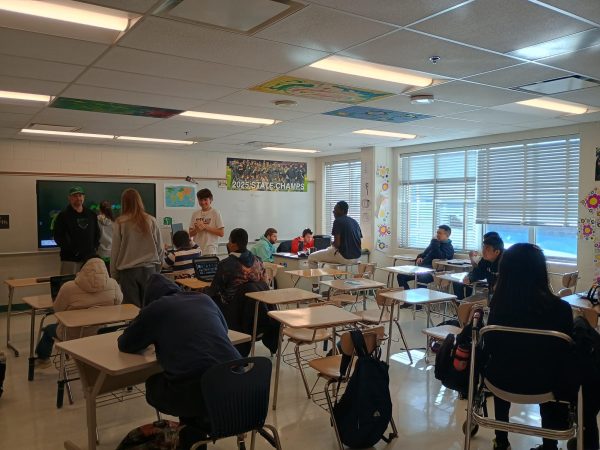
Best Buddies is a WJ club founded in 2005 created to help foster one-on-one friendships between students with disabilities (IDD) and the rest of the student body by matching student mentors with students with IDDs. It promotes inclusion through meetings and activities such as arts and crafts. Members of the club are assigned to “peer buddies” (a student with an IDD), and aim to create a more inclusive school environment, combat bullying and end the use of profanity against students with IDDs. The in-school club acts as a chapter of the broader “Best Buddies International” organization, which was established in 1989.
“I think it’s become a lot more than a club, and it’s more, especially in my life, to become kind of a passion, because it means a lot to me, and the friendships I’ve created kind of last throughout school and out into my personal life, and everything,” Best Buddies president, senior Macie Redmond said.