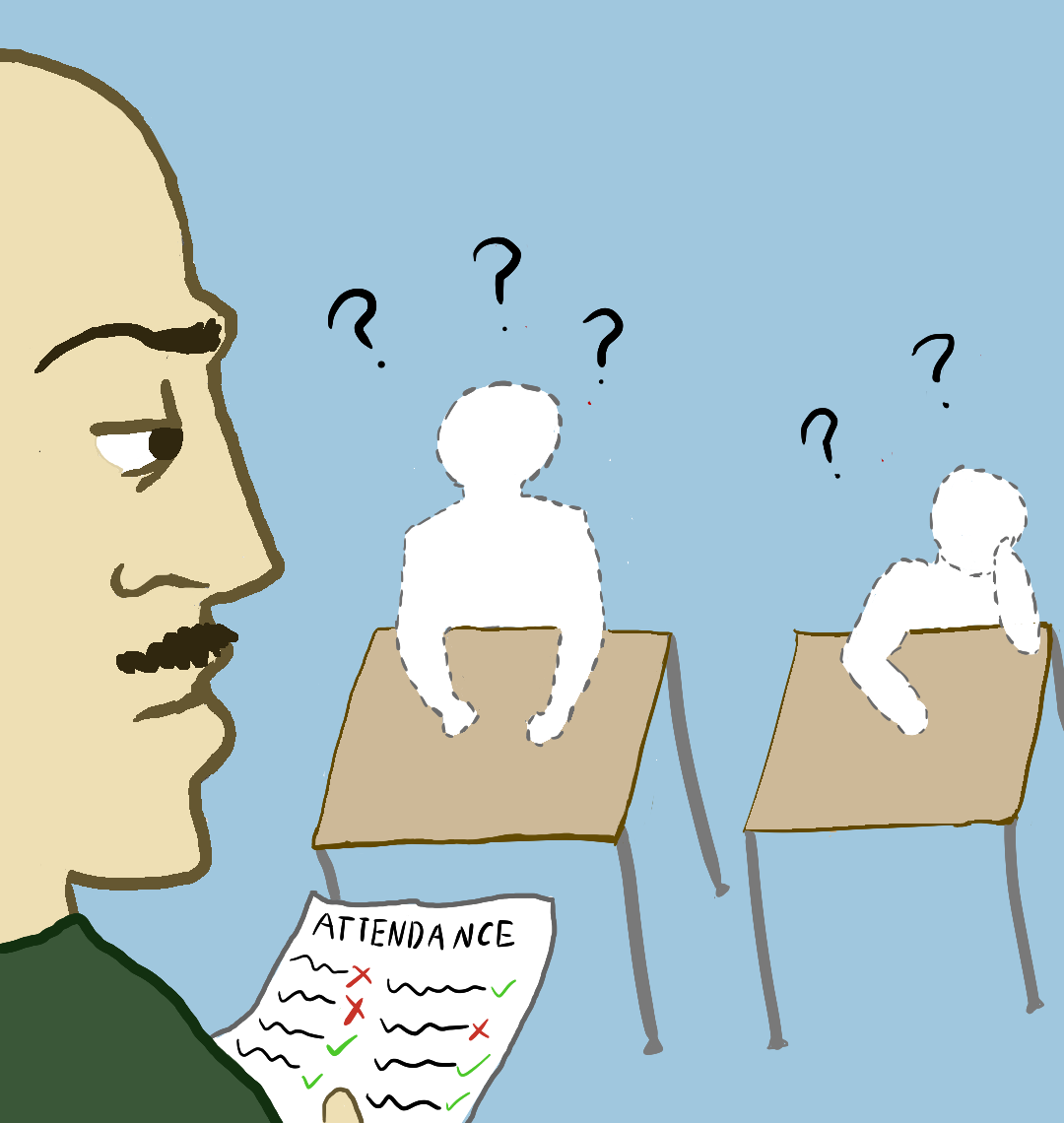


Late nights for social studies teacher Timothy Rodman often consist of his daughter’s art classes while grading AP classwork. Throughout their kids’ childhoods, parents are there supporting their kids. But for some parents like Rodman, they still have another set of kids that they have to coach through parts of their lives.
Juggling a work-life balance is something that most have to face at some point in their lives. In the lives of teachers who also happen to be parents, being present for both your students and kids can be difficult.
“I just had to become really intentional about time management and using my time in the school building wisely to avoid bringing things home as much as possible,” English teacher Claire Lipsitz said. “I had to allow myself to realise that it was okay to do that.”
Part of the balance is the importance of setting boundaries for oneself and others. Social studies teacher Timothy Rodman teaches three AP courses and one elective, as well as sponsoring four demanding clubs. So in the midst of coordinating so many parts of his life, boundary setting has become more and more crucial.
“How did you fit it all in? Some days you do and some days you don’t,” Rodman said. “Somebody came in today saying, ‘Can you do this?’, and I had to say, ‘No, I can’t’. You have to say no sometimes, but I think it’s a good life lesson.”
For teachers, much of the stress begins when they have to navigate taking leave. A little while after social studies teacher Tobias Meier started teaching at WJ, his second daughter was born. Still, he feels that support from other staff diminished some of the anxiety.
“[There was] the stress of the very beginning of the year, having to make [teaching] plans on top of everything going on at home…Once everything was in place, though and I had help from my colleagues, that really elevated some stress,” Meier said.
However, taking on these two hyper-involved roles does have its benefits, especially when the two are so interconnected.
“I think being a teacher helps me communicate better and helps me see things from a different perspective,” Lipsitz said. “In the other direction, I think being a mom gives me a different perspective on the way I understand students and their lives outside of school.”
From the student’s perspective, it can be overwhelming to lose their teacher for an extended period of time while they’re on leave. However, for staff on WJ’s literary magazine “Spectator”, supervisor Alexia Remy’s absence has served as an opportunity for each of them to become more independent.
“Since our team is smaller, people are more willing to step up and assume a little more responsibility over decisions with the magazine,” Spectator’s Head of Interview Defne Sahin said. “There have been some practical difficulties, but it just makes our team more collaborative.”
From a cultural point of view, the role of a teacher and that of a parent go hand in hand, as the former can find ways to connect with students on their level. This often leads to teachers forming stronger and more familiar bonds with their students.
“I’m getting to the place where my kids are becoming almost the age of my students,” Rodman said. “So who told me about ‘6-7’? It was my son. I used that in the first period, it cracked them up!”