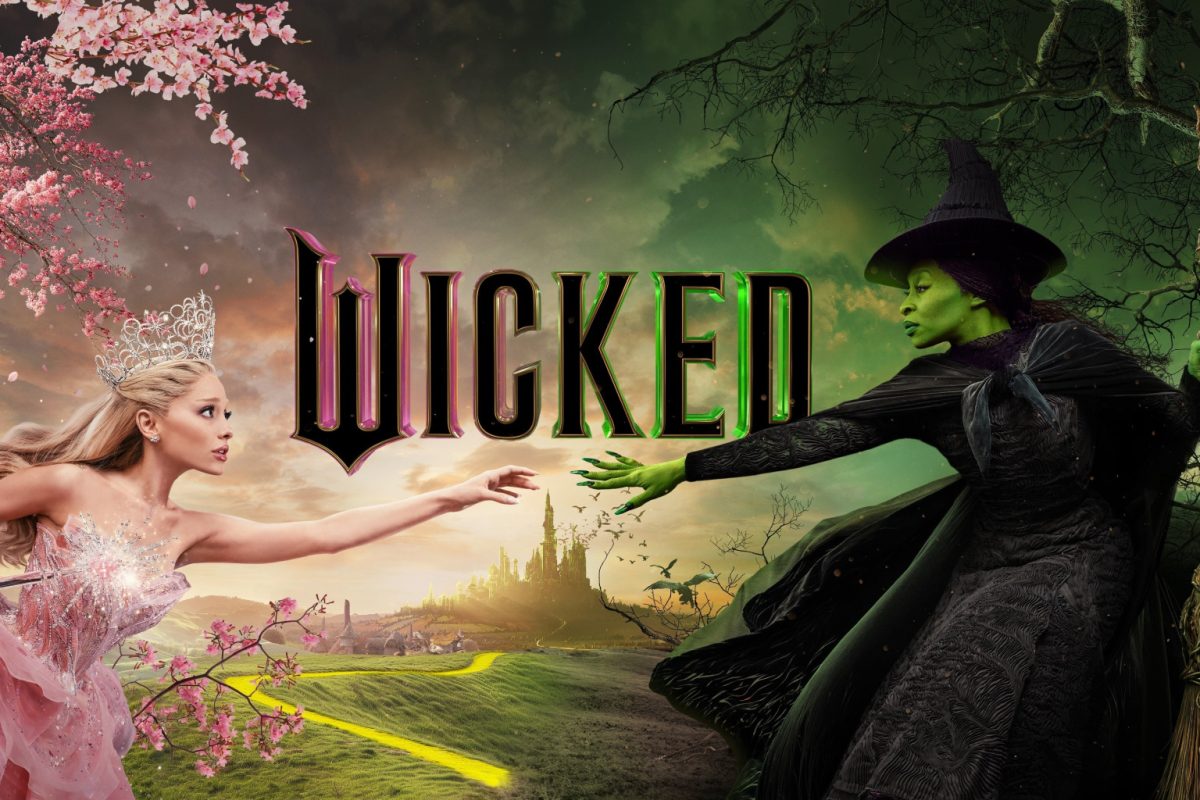
One full year after “Wicked: Part 1” debuted and the conclusion of the elaborate green and pink press tour, “Wicked: For Good” hit theaters on Nov. 21 to conclude the fate of Oz. Directed by Jonathan M. Chu, the elaborate and colorful imagery, powerful musical ballads and emotion-evoking story captivated the audience as they followed the conclusion of Elphaba and Glinda’s narrative.
“Wicked: For Good” picks up approximately one year after the conclusion of the first movie. We join Elphaba (Cynthia Erivo) living in the woods outside of the Emerald City after she was exiled in the previous film due to her unwillingness to be complicit in The Wizard’s (Jeff Goldblum) wrongdoings against animals. Living in the Emerald City herself, Glinda (Ariana Grande) is now acclaimed as Glinda the Good Witch and is a prominent public figure who uplifts spirits, is engaged to Fiyero and is beloved by all of Oz.
This dynamic develops an ironic contrast between the two best friends. As Elphaba continues to be branded as the Wicked Witch of the West through her attempts to expose the Wizard’s fraud, Glinda is becoming a beacon of hope for citizens of Oz. However, Glinda continues to work with both The Wizard and Madame Morrible (Michelle Yeoh), the people truly responsible for the danger in Oz. Throughout the movie, both Elphaba and Glinda attempt to convince the other to join their own causes. Their objective fails, ultimately drawing a larger divide between the two as they refuse to see right in the others’ ways.
As it is adapted from the Broadway musical, “Wicked: For Good” includes several incredible musical numbers, ranging from upbeat and jubilant to somber and heartbreaking, while all containing a catchy beat and thoughtful lyrics. Some significant songs are “No Good Deed,” sung by Erivo, when Elphaba descends into evil after the loss of Fiyero, and “For Good,” a duet starring both Erivo and Grande as their characters part for the final time. Both songs contribute substantially to the narrative and help move the plot forward in an interesting way to captivate the audience. “For Good,” the title of the movie, is accordingly one of the best songs in the whole musical. As they reflect on the impact of their relationship on their identities, the heartfelt goodbye of Elphaba and Glinda as they must both venture on their separate paths to success without the support of one another is bound to tug on the heartstrings of all viewers.
Additionally, the movie does an exceptional job of staying true to many elements of the Broadway musical. While movie adaptations often struggle with this aspect, inclusions such as the omission of Dorothy’s face and the recreation of the musical’s playbill cover in the final shot were all exciting features to pick up on. The movie does include two additional original songs created for the film specifically, “Girl in the Bubble” and “No Place Like Home,” sung by Grande and Erivo, respectively. These add to the narrative effectively by giving the audience further insight into Glinda and Elphaba’s motivations.
Towards the finale, Glinda is struggling with keeping up an act of goodness when she sees the treachery going on inside the Emerald City, especially now that she has lost both Fiyero and Elphaba. Similarly, Elphaba struggles to come to terms with her inability to create goodness and protect Oz because of her association with evil and distrust of the citizens. In the end, Elphaba sacrifices herself to become a symbol of evil, and Glinda takes responsibility to fix the corruption and make good in the world once more. This finale truly highlights the difficult decisions everyone is forced to make in their lives, and how the future is not always how we predict. But, we have to try and make our own good in the world.