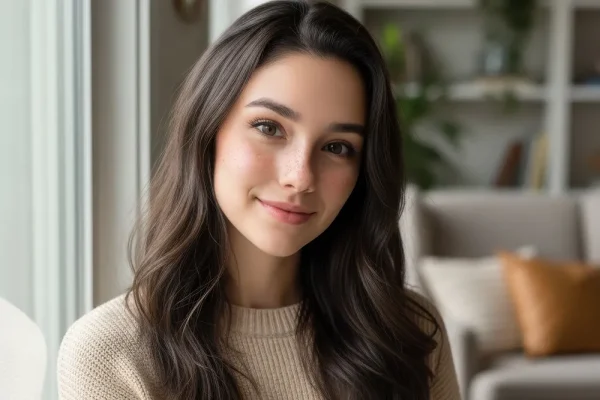
Next on stage is Tilly Norwood, Hollywood’s first artificial intelligence actress. With usage rights ready for purchase, Norwood may displace actors’ careers by incentivizing production companies to cut down on costs. As AI makes its way into the film industry, many wonder what this means for the future of art and entertainment.
Norwood is the creation of Eline Van der Velden, the CEO of AI production company Particle6. Velden has stated that Norwood is simply an artistic innovation, “not a replacement for a human being”.
To many, Velden’s intentions contradict the message that Norwood’s creation is sending–that technology is rapidly replacing human presence. Norwood, who was “trained” to embody a variety of performers, has not only allegedly stolen the work of other actors but threatens to displace their careers entirely.
The main concern with AI entering the entertainment industry is the possible loss of employment that would leave actors jobless. According to the Los Angeles Times, studies have shown an estimated 204,000 entertainment jobs as being disrupted by AI.
For actors specifically, AI performers would save companies the excess fees associated with hiring human casts. This doesn’t speak for the rest of the artistic industry, however, with nearly 86% of surveyed artists reporting concerns with AI mimicking their styles without consent, according to a 2024 study by the Society of Authors.
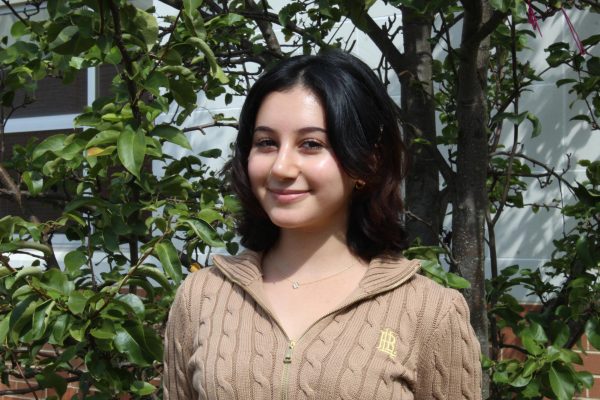
Along those lines, many students claim that the absence of human actors will deteriorate production quality. Senior Ryan Heminsley, National Art Honor Society co-president and Film Club officer, believes that AI is displacing the dedication and quality of art and film.
“If you want to have a movie that conveys anything, you’re gonna need it to be human,” Heminsley said.
AI in film isn’t the first usage of modern technology in artistic creation. Pop artist Andy Warhol was famous for his colorful prints, created using commercial silkscreen printers managed by his staff.
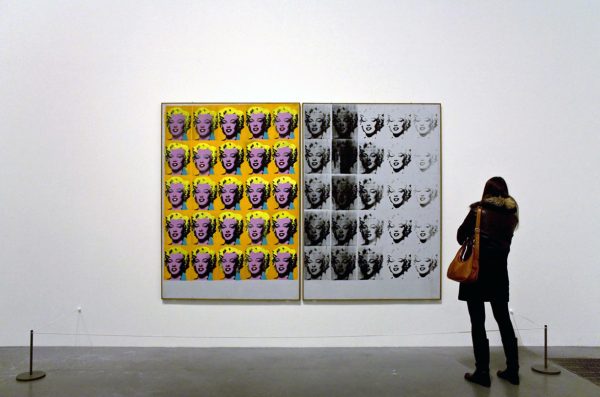
Warhol’s print Marilyn Diptych (1962) reduces Marilyn Monroe’s face into a monotonous icon. The diptych ironically idolizes her stardom yet denies her humanity; in the work, Monroe is simply a two-dimensional replica.
Marilyn Diptych’s controversy is similar to the controversy stirred by Norwood, where celebrities and stars are regarded as no more than flat characters. Many feel that if celebrities are no more than images or icons, AI will have no problem replacing them.
Many criticize Norwood’s creation as pulling from a multitude of human actors, celebrities, and personas to develop its character. Others have questioned whether human references used to create Norwood should consent to its usage.
According to Freshman Adrian Dantro, current AI technology simply draws from preexisting sources when completing tasks, recreating what has already been done.
“A machine can’t really build [creations], because it has to pull from what’s already there. But human art is whatever you can make it,” Dantro said.
Despite the proportion of students who have taken a negative stance towards AI in general, not all students view it so unfavorably. In particular, senior Rishi Mokkarala professed having positive views towards AI and even interning for AI technology companies on his own.
“How insane is it that we have AI capable of producing characters on screen, right?” Mokkarala said.
But his views on the matter don’t stop here. A devout film buff, Mokkarala has conflicting views on the extent to which AI should be used in film and creative industries.
“Art is meant to elicit opinion, elicit passion, a perspective, and I don’t think that AI can do that, the way a real human artist can,” Mokkarala said.
Present AI systems lack the skills required to invent entirely new concepts, but that may not be the case in the near future. Students have wondered whether AI will cease to be used, fall heavily restricted or roam free, taking over art as we know it.
“Humans should be the ones using AI as a tool. So AI is not the writer, AI is the grammar agent,” Mokkarala said.
“I think eventually AI is gonna have a lot more restrictions on it because of both the environmental and the societal impact,” Heminsley said.
Mokkarala proposes that AI should be strategically wielded to advance creative efficiency without dominating creation wholly, believing the two industries can coexist if used properly.