
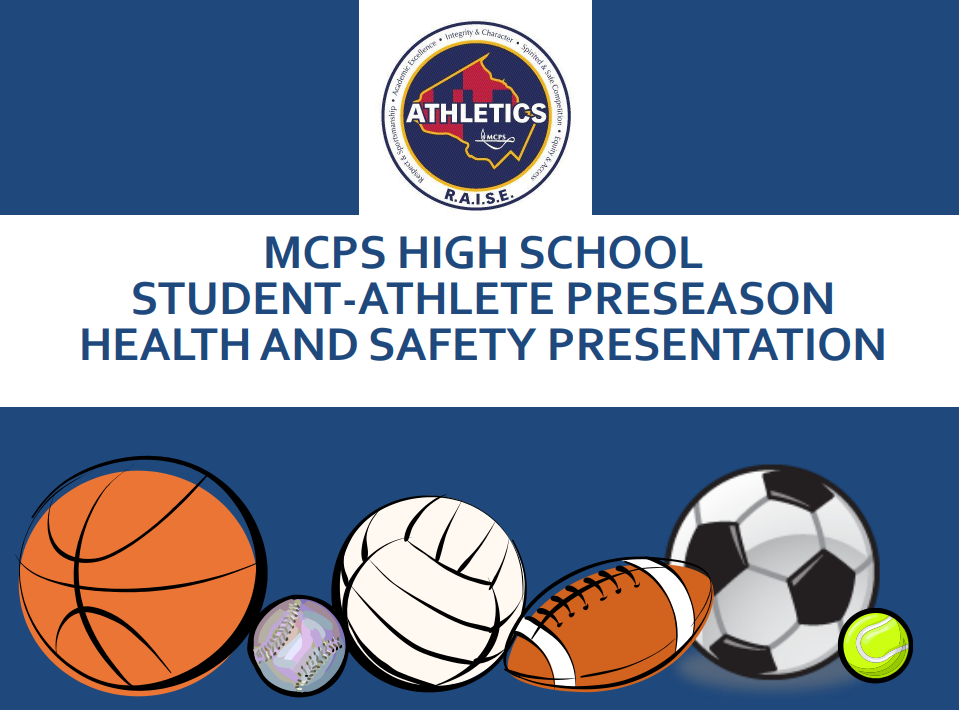
Every athlete in every MCPS sport is required to view a health and safety presentation before the first competition of the season. However, so far, the only winter sports that have viewed this presentation are the girls’ basketball and indoor track teams. Every other winter sports team—boys’ basketball, bocce, swim and dive, hockey and wrestling—has yet to receive it.
The presentation consists of 24 main slides, with eight additional slides providing more information and resources. The core slides focus on a number of different things regarding health for student-athletes. Five of the slides focus on what hazing is, what makes it different from bullying and intimidation and how to recognize and prevent it. In addition to hazing, the presentation also reminds athletes of mental health and other specific health concerns, such as dehydration and concussions.
“I gave the health and safety presentation to my distance runners, and the other track coaches did the same for the rest of the team,” indoor track coach Alexis Phares said. “Sometimes we get so caught up in our sports, competition and winning that we kind of just forget how to maintain our social, mental and physical health.”
The purpose of this presentation, in MCPS’s words, is to educate and make student-athletes aware of the importance of basic health and safety needs and resources available to them. It is also supposed to “give student-athletes an understanding of the role their health plays in academic and athletic achievement,” as well as “discuss how student-athletes can promote a positive culture free of bullying, hazing, harassment and intimidation.”
The presentation also promotes positive team culture and MCPS R.A.I.S.E. values. This acronym stands for respect, academic excellence, integrity, spirited and safe competition and equity.
“I think the presentation reinforces the need for student-athletes to have good behavior and prevent hazing and is just supposed to help us with remembering that,” girls’ basketball captain senior Elizabeth Martin said. “We might not consider some things that adults would as hazing, but I don’t think it’s ever been bad to the extent that people think it is.”
These things Martin mentions might be considered more of a “team tradition” or “soft hazing.” Examples of this, such as lowerclassmen being designated to get the water jug for the team, blur the lines between what is and isn’t considered hazing. However, some sports themselves also have their own gray areas, since a few teams are technically not official MCPS teams but are simply affiliated with the school.
“My team and I haven’t received this presentation yet,” hockey player junior Cameron Fisher said. “We’re not actually sanctioned by the school, so we don’t get any of their information. The closest thing I’ve seen to hazing is a kid leaving our team because they got into an altercation, but that’s not really hazing.”
Let’s face it: most athletes might dismiss or not care about this presentation after they view it. They might even consider it a waste of their time. However, coaches, athletic directors and administrators would argue that passive presentations like these are necessary to combat issues like hazing and mental health problems.
“It’s just a good reminder for all athletes all the time,” Phares said. “I don’t think I can see hazing being a problem in the future because our team has a positive culture and everyone looks out for each other. If our athletes see something concerning, they always say something.”
But the question is: Is this presentation really necessary? If most athletes aren’t going to give this a second thought, is there a better, more engaging way for MCPS to achieve its goals?