Cheating has existed at Walter Johnson since it opened its doors in 1956, 70 years ago. Over time, cheating has taken on many different forms, but it has been a consistent issue within the school through the years, and this is proven through The Pitch.
In 1962, the first ever article about cheating was published in The Pitch. It discussed the pressure applied on students to get good grades, as noted by C.H. Breedlove, a former Walter Johnson teacher.
“I feel that it is the teacher’s responsibility to design a system of minimizing the temptation,” Breedlove said.
Cheating comes in many different forms, and not all forms of cheating are explicit. For example, a traditional form of cheating is looking at another student’s paper during a test, but sometimes students think outside the box, or just slightly bend the rules.
A unique form of cheating is through the attendance system by using excuse notes to get out of class when convenient, either to avoid a test, or to simply miss class for the day. This technique is still used to this day by WJ students, and is a very common form of cheating.
“Students forge their parents’ signatures on excuse notes without even thinking about it,” former WJ teacher Miss Dorthy Butts said.
By getting their absence excused using a forged note, students are able to study more or receive answers from previous test-takers in order to secure a better grade.
In 1985, an article about why students cheat was published in The Pitch. It discussed the root of the problem, why students cheat, by focusing on the emphasis placed by schools and colleges on grades. The article gives students a forum for expressing their opinions on how to combat cheating.
“They pump all [these ideas] into our heads that we must get good grades, that cheating is just a natural progression… It seems that the whole purpose of school, to learn, has been forgotten,” an unnamed senior girl quoted in the original article said.
As long as students feel the pressures of getting into their dream colleges, it’s a safe assumption to make that cheating will continue to run rampant. Recently colleges have been placing more and more emphasis on extracurricular activities, things a student cannot fake, and shows their involvement in their community as well as their well roundedness.
While cheating is often brought about by external pressure on students, the discussion around the topic amongst students remains the same; is cheating worth it? In 2003, a Pitch article directly addressed the pros and cons of deciding to cheat, as well as the forms of cheating that teachers are supposedly aware of. It also noted that around 74% of students admitted to at least committing plagiarism, displaying how widespread cheating has always been at WJ.
The article ended with a thought provoking quote, “It’s up to the teacher to determine whether to give you a zero on the assignment, a parent conference, suspension, or possible expulsion.”
Students forget, teachers were once students too, and they understand the minds and mannerisms of a student better than anyone. They know when students cheat and how they’re going to do it.
When a student decides to cheat, the ramifications of their actions are usually in the back of their mind, but what happens when the risks of cheating are lessened by unexpected circumstances?
During the pandemic, students were at home sitting on zoom meetings, often without their camera on. The pressure to complete assignments felt less severe and the stress element of school was somewhat removed for many students. However, the pressure to get good scores remained, and as a result, with students taking quizzes within the comfort of their own home, cheating was more widespread than ever.
In 2020, The Pitch highlighted this issue of using secondary technology to aid in cheating.
“Recently, students across the county took the MAP-R and MAP-M tests…Using a second computer or a hidden phone could easily be used to look up vocabulary words or math formulas,” WJ student Collin Okim said. “A test designed to check the effectiveness of virtual school last spring was completely invalidated.”
With teachers powerless to stop students from cheating, it became a habit to take the easy route, a habit that many students would go on to keep even after the pandemic ended and schools reopened.
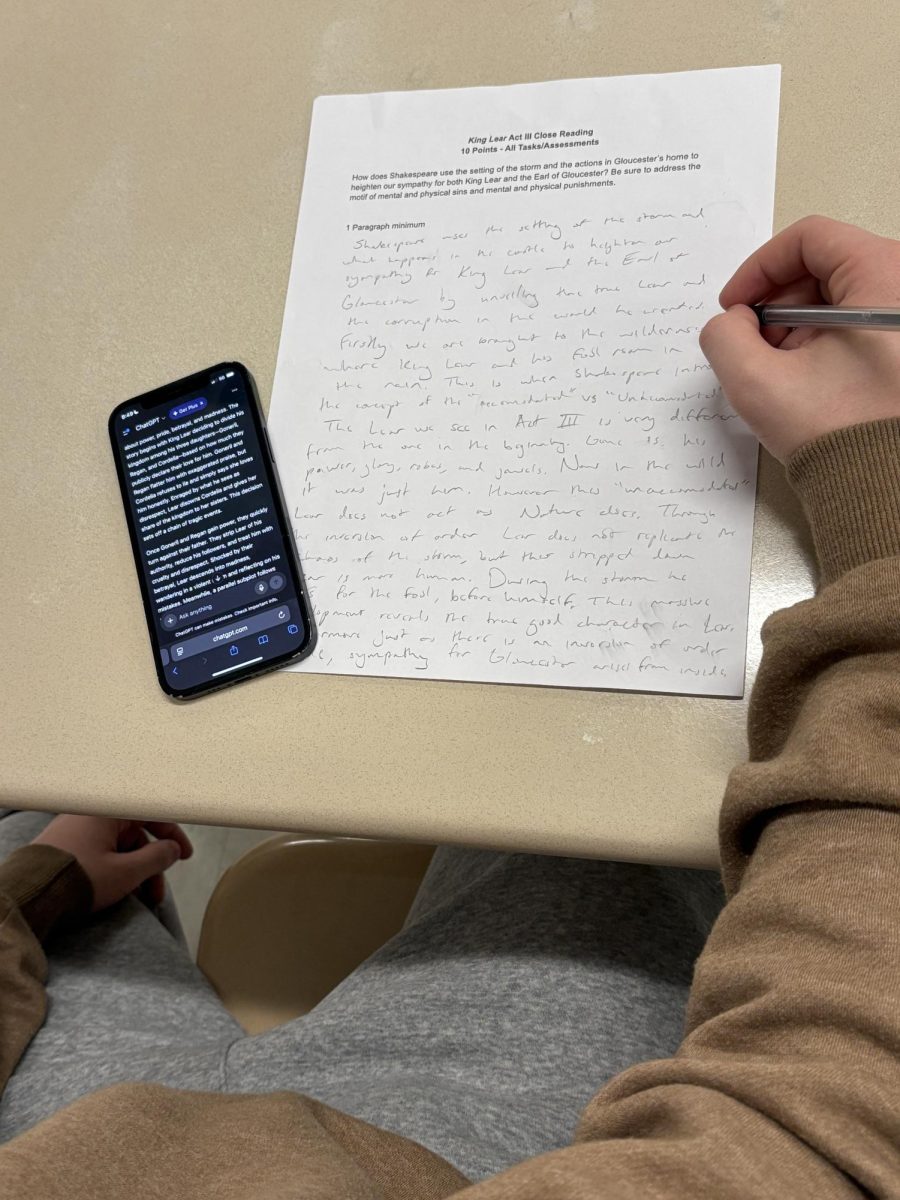
In 2025, a Pitch article addressed the newest and most prevalent form of cheating today, AI. In a survey given to teachers and students asking whether or not using AI to proofread articles should be considered cheating, an overwhelming majority of teachers said absolutely—the students, not so much.
But it is much more than simply proofreading that AI is used for. Students in foreign language classes use AI to translate whole texts or assignments. Students in advanced history courses use AI to complete reading guides so they can avoid textbooks. English classes see AI use at alarming rates with students plagiarizing parts of or entire essays.
AI is just the latest form of cheating that has popped up in recent years, and the newest step in the ever evolving timeline of cheating here at WJ.