
Looking back at 70 years of WJ, there are many things that differ for students today and students from the 90s. These days, we are only familiar with the annual Homecoming dance and Senior Prom, but this hasn’t always been the case, looking back at our history. Whether it be decorations or the activities surrounding the dances, WJ’s concept of school dance culture since the 1950s has evolved tremendously, but what differences do we really see today?
Starting the school year off strong
During the 70s, as a way of starting off the new school year and welcoming new students to WJ, the student council association (now called the SGA) used to host a dance with live bands, snacks and a summer-related theme. This dance would let students get to know one another and the school’s offering of social activities. Some freshmen hope to have more chances to dance with their classmates.
“[I want] more opportunities for everyone to dance,” freshman Rachel Klinger said.
But now, instead of a dance, our school hosts a club fair where students can get to know the extracurricular activities offered as well as make new friends.
Homecoming
Homecoming is something every student is familiar with, but the Homecoming we know now isn’t the same as Baby Boomer and Gen X alumni would be familiar with. Back when the school opened in the 1950s until now, Homecoming consisted of spirit week dress-up, hoco hallways, the traditional football game and the dance at the end of the week.
However, something that students would be surprised to find out is the annual float parade competition the school hosts. Each grade would decorate a float corresponding to the same theme given to them for their homecoming hallways. Students tended to go all out for the chance to beat the other grades and win a trophy.
“Each grade had a float, and then the cheerleaders had a float and the poms had a float and it was like leading up to homecoming. 24/7 you were working on it, like you put so much time, hours and effort into it. You made each individual flower, then you attached each individual flower to chicken wire,” class of 1989 alum Julie Kaminsky said.
When it comes to Homecoming, students nowadays wouldn’t assume there to be a king and queen, but this wasn’t always the case. Another tradition students haven’t seen within today’s dance culture is the Homecoming court. Students would come together to vote for a Homecoming court by choosing a king and queen. Later on, sexism became a topic of conversation, which brought some controversy when certain ballots would be excluded on purpose, resulting in unfair results when it came to the winner.
Dances have evolved greatly over the years, and many students aren’t aware of what they used to look like.
“I never knew about [any] dances [we used to have],” senior Luka Jevtic said. “[Dances] have been less popular recently. I feel like it’s more a freshman kind of thing and more seniors skip the dance, especially with hoco.”
Halloween dance
To end the busy month of October, the Wheel Club of WJ would organize a Halloween dance where students would attend in costume and dance the night away with their friends. The prime reason for this dance was to keep teenagers out of trouble and out of harm’s way, as Halloween is known to come with the dangers of drunk driving. A couple of schools in Montgomery County took this dance seriously as a way to keep students safe.
Winter dances
Although WJ students aren’t accustomed to winter dances, there was once a time when they were a large component of Wildcat culture. A dance called the Senior Hootenanny Jamboree took place right before winter break in the 1960s, towards the end of exams. This dance ended up symbolizing the end of the first semester. It was a senior-only dance where the school provided live music and entertainment for the students.
In the early years of WJ, there was a Sno Ball dance. Students would get extremely excited about the idea of attending a winter dance, which a special decorations committee planned with the intent of creating a wintery and cozy atmosphere. The decorations committee would include Christmas trees and would spread out snow-like decorations throughout the dance floor. There would be live entertainment, like bands and acts, to hype up the students and raise the atmosphere. Similar to Homecoming with a Homecoming Queen, there was a Sno Ball Goddess that the students voted for. Alumni would also come to the dance to revisit their school and see how it had changed.
February dances
The class of 1982 eventually replaced the Sno Ball dance, and that senior-sponsored event was transformed into a Valentine’s Day dance. In WJ’s past, there used to be a Valentine’s Day dance where students would attend with their friend groups rather than going with dates. This was because they wanted to increase the dance attendance, and more people would turn up due to it being informal. The dance would only cost $4 per person and students would expect live music and entertainment.
As a way to celebrate the additional day in February every leap year, WJ threw a Sadie Hawkins dance. This dance started back in the 1960s, and it was customary for girls to ask boys to the dance, mixing up the tradition of guys asking girls. This dance was $1 per person, meaning $2 per date. As time went on, the girls lost motivation to ask the guys, and there was no more money available to continue this tradition, so the dance shut down. New students roll around every year, but not everyone gets the same dance opportunities.
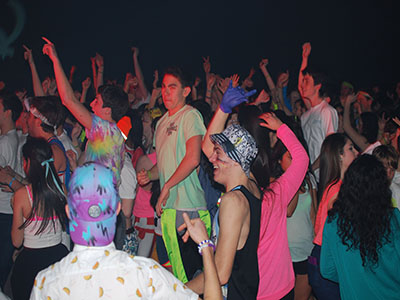
Glo was a popular dance and fundraising event established to take place in February as part of Pennies for Patients. Students who attended Glo wore glow-in-the-dark outfits or neon clothing as well as glow-in-the-dark bracelets. There was a live DJ and students came with a lot of energy and excitement for the February dance. In the WJ we’ve come to know now, there is no winter dance whatsoever, likely resulting from recurring incidents of student drinking and sexual assault. It violated the safe space that WJ wanted to protect and subsequently, the school stopped hosting the dance.
Spring dances
As a way for the juniors to devote their love to the seniors, the juniors organized a junior-senior prom in the spring. This dance was in addition to the Senior Prom and was sponsored by the juniors, meaning that seniors got in for free. The sophomores also took part in organizing this dance by collecting the dance tickets at the door. There was a junior-senior prom court that started off with more junior princesses than seniors, but as time went on, there were more senior princesses. Ultimately, the senior with the most votes won prom queen. This dance had extremely extravagant themes and decorations like Arabian Desert or Place in the Sun. This dance also featured performances by live bands. Nowadays, this dance doesn’t exist, even though many students would love to partake in a dance like this and bring back this tradition.
“The junior and senior prom, that would be amazing, because I’m a junior right now and I’d love to experience it and [see] what prom is like,” junior Omer Granit said.
A dance seniors know and love today is their big Prom held towards the end of the year. The tradition is to get ready with all your friends, dress up in formal wear like long gowns and tuxedos, and take photos to make the memories last. Finally, at the end of the event, students attend the actual prom party. Students both then and now can agree with the familiarity of these traditions, but there was one main difference between prom in the 1990s and now. The Washington Regional Alcohol Program (WRAP) would contact area hotels to prevent high schoolers from renting limos or hotel rooms on their prom night. Because of this restriction, schools tried to come up with an alternative to keep drunk teenagers off the streets and prevent drunk driving. During this time, the Parent Teacher Student Association organized an idea for a post-prom breakfast, hosted at the school. Between 1-4 a.m, seniors were invited back to campus to enjoy a nice breakfast after their long day of prom activities. Now, this has evolved into the post-prom party, inviting seniors to change into their pajamas and play various games with their friends.
Looking forward
Most of these dances were assisted by a social committee, showing the differences in effort between then and now. Seeing these comparisons and changes in school spirit, many students would agree that if the school were more invested in hosting more engaging activities for their students, school events would be a much bigger hit.
“My cousin lives in California [and] his school does these kinds of dances and he said it brings up school spirit, so I think we should do that,” senior Rehan Rao said.