
MCPS plans to switch all academic programs from a countywide to a regional model, aimed to debut in the 2027-2028 school year. With these changes, the county aims to make specialized programs more equitable and accessible for all
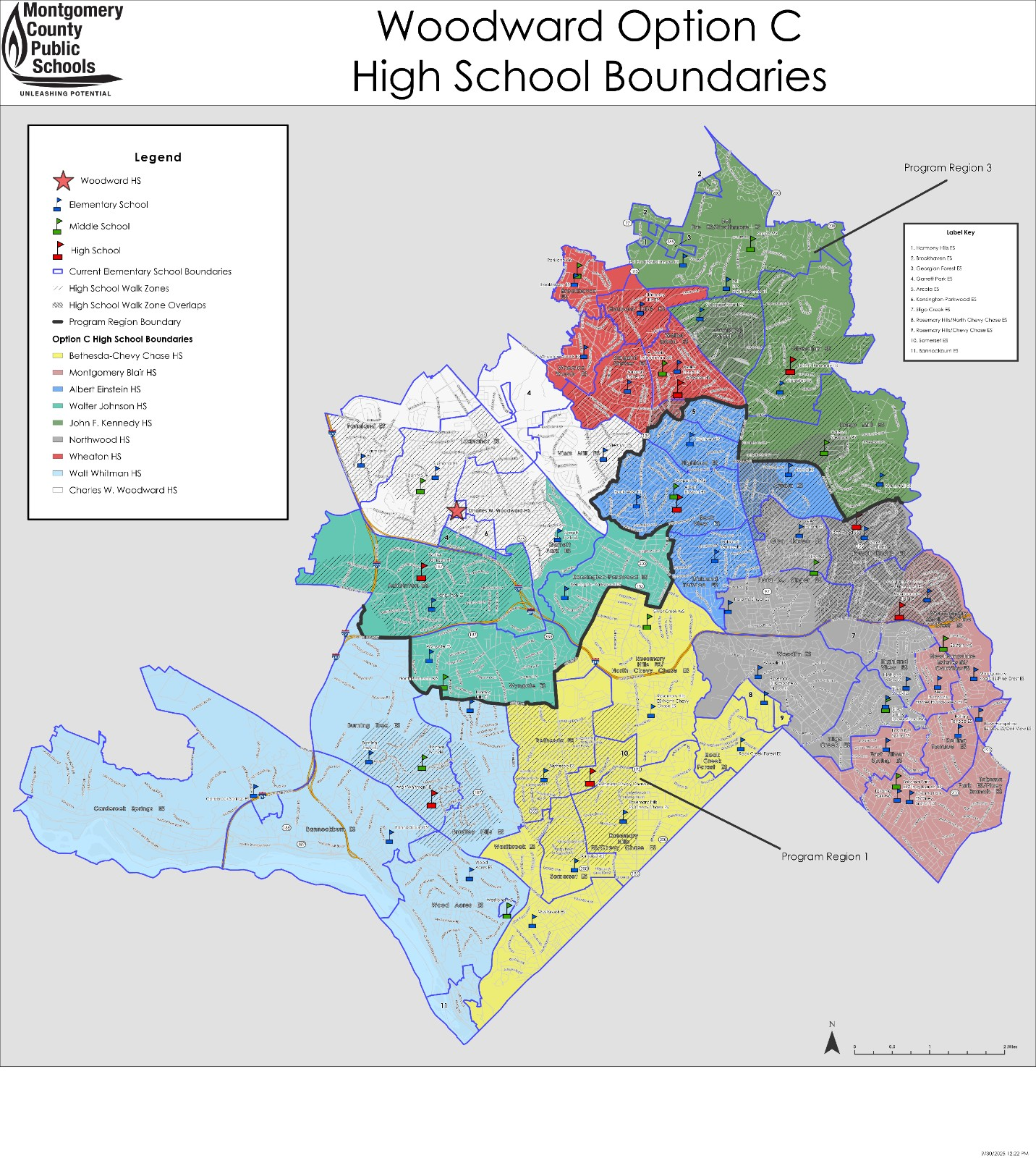
The proposed Regional Programming Model would group all MCPS high schools into six different regions. WJ would be clustered into region three along with Kennedy, Woodward and Wheaton High Schools.
MCPS has assured community members that each region will contain programs in all five academic “themes” recognized by the county. These themes include Medical Science & Health, STEM (Science, Technology, Engineering & Math), International Baccalaureate Diploma Program (IB) with Humanities & Languages, Leadership & Public Service, Visual & Performing Arts and Design & Communication. WJ is being proposed as having a Leadership & Public Service program.
Beginning with the class of 2031, current 7th-grade students will only be able to apply to specialized programs within their own regions.
Many community members have begun voicing their concerns for this drastic change, worrying that these new regional programs won’t match up to the current academic rigor of the current countywide programs at Blair, Richard Montgomery or Poolesville.
“MCPS does not have a track record of running comparable regionalized programs across the county, and there is no indication that they have a plan to ensure equitable quality of programs among regions,” a document published to inform MCPS parents about the program analysis written by the Montgomery County Council of Parent Teacher Associations (MCCPTA) said.
As for WJ, MCPS has yet to explain exactly how specific local programs such as APEX will be influenced under this new model.
According to MCPS, local pathways will only continue if they reflect student interest, measured by enrollment, completion and student outcomes.
Concerning the question of whether local high schools will continue to offer application-only programs, MCPS claims that similarly, these programs will only continue to exist if student interest remains.
Another concern waning on the minds of students is the undecided fates of current specialized programs including Blair’s magnet program, Einstein’s Visual Arts Center (VAC), Richard Montgomery’s IB program and Thomas Edison’s School of Technology.
The MCCPTA drafted a resolution, asking MCPS to delay the Academic Programs Analysis for at least a year, in hopes that it’ll give the community more time to provide stronger feedback on these changes.
“This resolution emphasizes that major program changes should not move forward without clear data, transparent planning and meaningful community involvement,” the MCCPTA said.
There’s still lots of uncertainty as to how the implementation of the regional model will coincide with the ongoing boundary study. Families have questions as to how the realignment of boundaries will influence the availability of the academic programs.
“My personal question: Should the curriculum and the number of seats available in each school be set before determining the boundaries?” PTSA secretary and WJ cluster representative Deborah Kornbluth Berger said.
Even students who aren’t involved in magnet or special programs will face repercussions from these alterations. This analysis will also affect which schools offer certain advanced courses, how MCPS will allocate funds and distribute staff members and likely limit the variety of themed pathways offered in each high school.