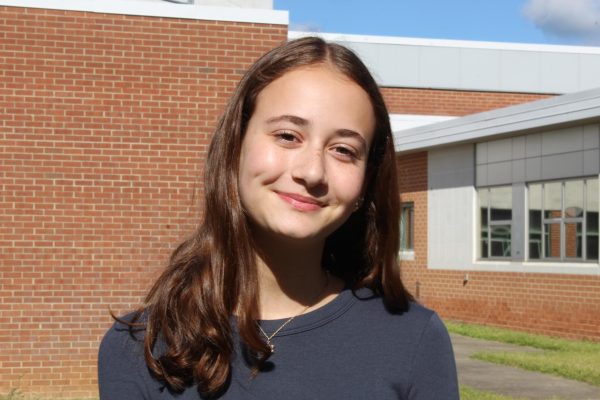
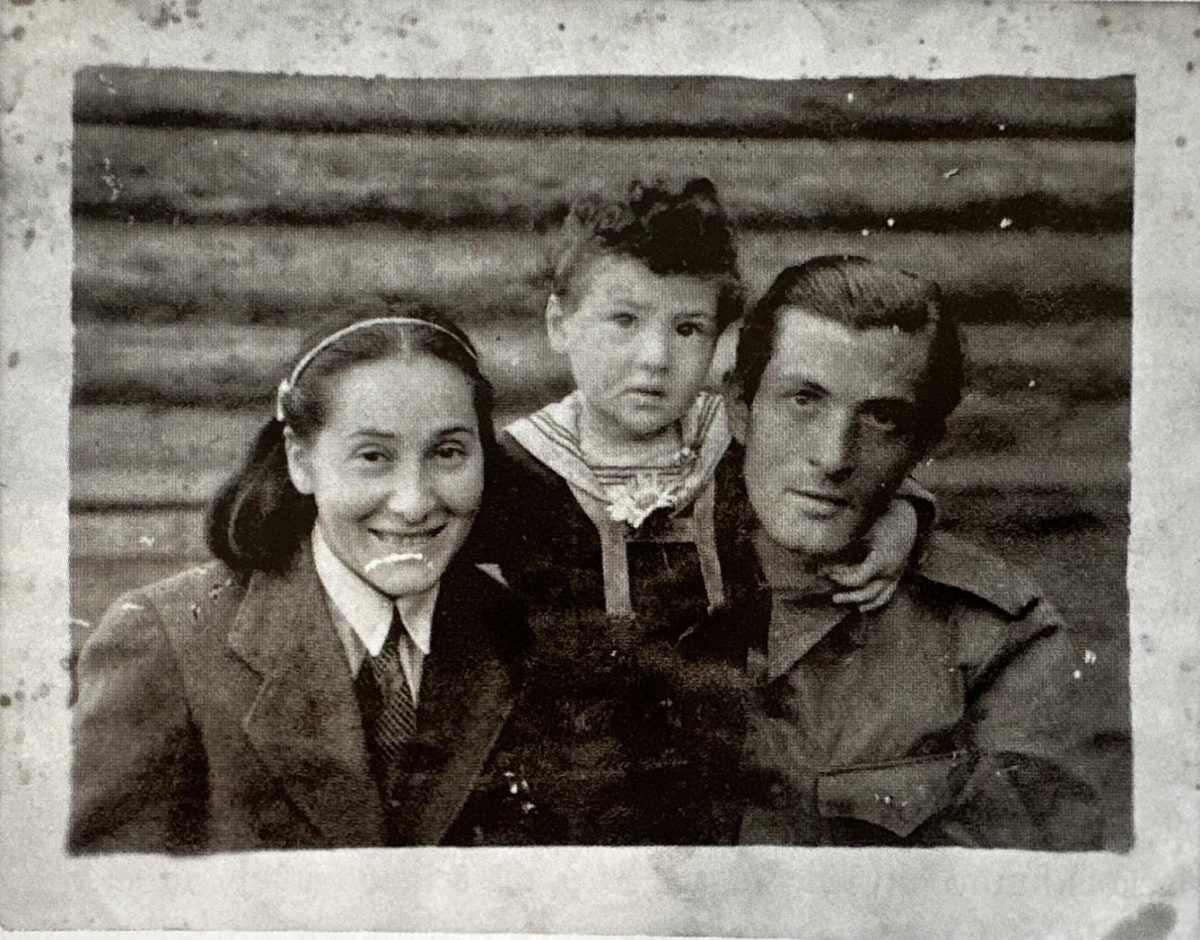
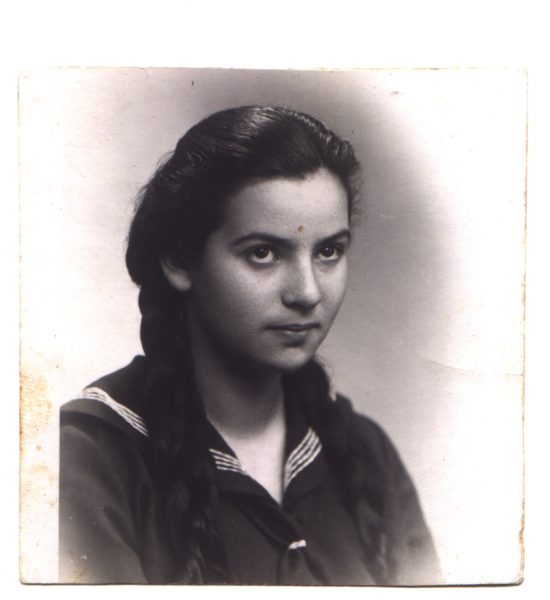
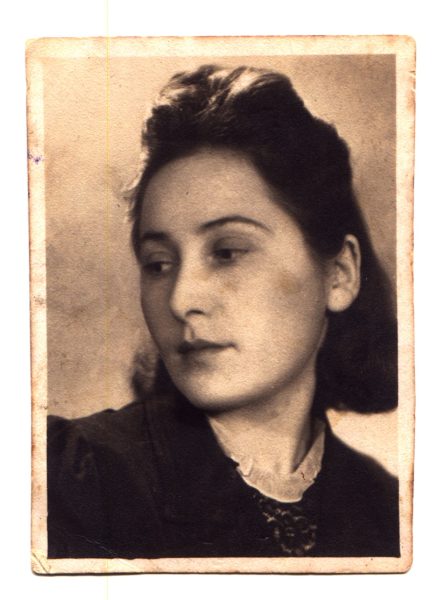
My now 89-year-old great-aunt Lila spent the entirety of the Holocaust living behind a wall in a six-foot room with four other people. My great-grandparents survived years in a work camp in a forest outside the Russian border. I have relatives who escaped Auschwitz, who lived in Ghettos and lost everything. As a 16-year-old Jewish girl raised on these stories of darkness and perseverance, I have seen firsthand how vital Holocaust education is, and how crucial it is for current adolescents to truly understand it.
Jewish people make up 0.2% of the world population. In MCPS, 10% of students are Jewish. With such a significant Jewish population, it is also important to note that antisemitism (hatred, prejudice or hostility against Jewish people) remains very prevalent in our school and community. Although antisemitism can look like physical violence or direct confrontation, it is often more subtle, seen through graffiti or social media comments. Importantly, antisemitism has surged by over 200% in the U.S according to the Anti-Defamation League (ADL) Following the October 7th attack in 2023, when 1,200 people in Israel were murdered by Hamas, a neighboring terrorist organization.
If students were more educated about Jewish history and the Holocaust, chances are antisemitism would greatly decrease. According to B-CC Holocaust Studies teacher Christopher Murray, “Antisemitism doesn’t start at the Holocaust and doesn’t end at the Holocaust. The Holocaust is a lesson that can be used in the greater context of teaching students about antisemitism, and not the other way around. But unfortunately, I think a lot of times, we flip this script, and so students are presented with the Holocaust, and then learn about antisemitism within the context of the Holocaust, and that can give a warped opinion about antisemitism today, as well as antisemitism that preceded it.”
In our current polarized society, where information spreads like wildfire, critical thinking has dwindled and misinformation has surged, it’s easier to understand how bystanders in the Holocaust could be so ignorant. Just like present-day social media, propaganda allowed Hitler to gain public support and consequently win a public election. Understanding the fact that people were so willing to blame others and that even Nazis were normal citizens, we learn what humans are capable of and how to prevent something like the Holocaust from happening again. “If you learn the history of the Holocaust, and you’re able to learn the process, you can identify the processes of hatred and how it happens, and how it could be possible that something like this could happen,” Rabbi and director of Greater Washington National Conference of Synagogue Youth (NCSY) and Jewish Student Union (JSU) Ephraim Miretzky said. “Then the next generation is better educated, not just only to prevent antisemitism and Jew hatred, which is integral and is what the Holocaust was mainly about, but it will also allow students to identify those patterns and be able to help best fight them.”
According to Maryland law, schools are required to teach students a foundation of Holocaust education. However, through no fault of their own, classes such as AP World History have a tendency to compress four years of death and despair into two 45-minute sessions. With the amount of content required to cover in a year, it is very difficult to dedicate sufficient time to the Holocaust. But with that being said, a genocide of this magnitude with such serious repercussions should not be oversimplified. It deserves its own class, or at the very least, a semester. Some MCPS schools, such as BCC, have been successful in their efforts to include a Holocaust education elective class. At WJ, however, these attempts have not yet succeeded.
“There is a new class in MCPS that is just Holocaust for a semester. And I believe that it was offered here to potentially run, but then it didn’t run this year, and that has to do with how many kids sign up,” AP World History teacher Katharina Matro said. “Nobody signs up, they can’t run.”
In such a competitive county, where college is on the forefront of everyone’s minds, taking a non-honors elective course, no matter the subject, is not an option for many students. At WJ, the course would have run if not for the lack of student registration. For this reason, Holocaust studies classes should be either sufficiently integrated into mandatory courses, or given as an honors elective.
It’s easy to look at all the atrocities committed and say that you would never let something like that happen. That nothing like it could ever happen again. I wish I could say the same. To me, the most terrifying part is that people knew what was happening during the Holocaust but still chose to look away. Because it’s easier to choose ignorance than to face reality and act. Eighty years later, human nature has not changed. I will scroll through social media and see comments claiming that the Holocaust never occurred, or that “6 million wasn’t enough,” and find myself wondering what it would take for something like it to happen again. Reading through my family’s accounts during that time, one message appears again and again: remember. Remember what humans are capable of. Remember the lives lost. Remember the stories of courage and sacrifice. Because the only way to move forward is to learn.