One night last winter, as I waited for the J2 on my way home from wrestling practice, I noticed an out-of-place white patch in the grass by the bus stop. Looking closer, I saw that the patch was a collection of towels, laid out flat between the sparse trees foliage by the sidewalk so as to be just barely visible from the bustle of Old Georgetown Road. After a couple seconds, I realized that I was looking at a makeshift bed.
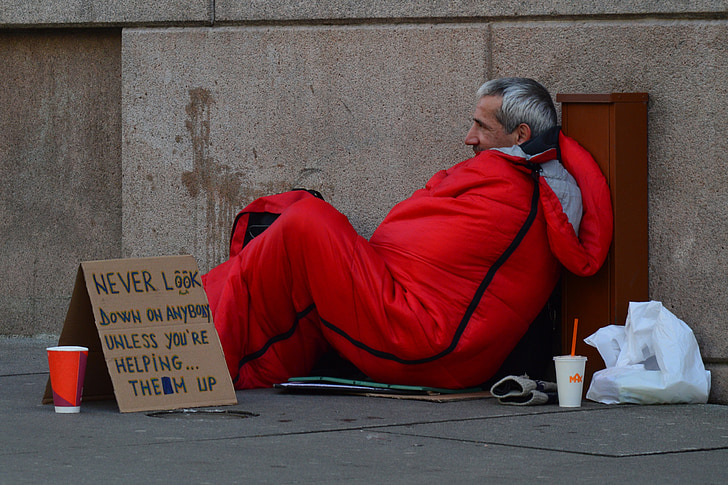
Of course, this wasn’t my first time seeing homelessness in the WJ area. Every day, students walk or drive past men and women soliciting charity on the way home from school, holding cardboard signs as they walk the medians between Wildwood and Georgetown Square or sit patiently in front of nearby storefronts.
But that moment struck me because, in retrospect, it was the first time I became fully aware the bizarre contrast between the upper-class suburbia of Bethesda and the struggles of its poorest residents – residents who, based on my few conversations with them over the past couple months, regularly receive less than 10 dollars a day in charity despite living in one of the wealthiest areas of the county.
So what can we do about it?
I think the place to start is with stigma. It often seems like homeless people are the only group in the United States towards which almost any behavior, from complete ignorance to downright hostility, is socially acceptable, and it’s no wonder why: most people grow up seeing those around them largely disregard the unhoused, watching individuals in positions of power work harder to push them out of sight than help them. We become accustomed to stereotypes in the media and anti-homeless architecture in public spaces.

This culminates in a blend of apathy, fear and guilt, which I believe is one of the greatest obstacles in the path towards ending homelessness. I don’t think we can achieve anything close to that goal until we learn to treat homeless people with the same empathy as we would a friend who was going through a difficult time – not out of pity, but out of respect.
Another necessary piece of any viable solution is collective action. Seeing poverty every day can make it seem like a fact of life, an inevitability against which we are totally powerless, but for evidence to the contrary, one need not look further than WJ’s club list. WJ Food4All, a club that sends a group of student volunteers to local soup kitchens on a monthly basis, has helped fight food insecurity by supplying hundreds of hot meals to those in need. Even small amounts of volunteer work can make a tremendous difference.
However, I know that the majority of the people reading this article likely don’t have the time or means to volunteer for hours or give money to every unhoused person they pass, which is why little acts of humanity are so important. Just wishing someone well or saying hello can go a long way, and simple conversation can be valuable for everybody involved; the unhoused and unemployed people I’ve spoken to in the last couple of months have been some of the kindest and most interesting people I’ve ever talked to.
Homelessness near our school shouldn’t be ignored or stigmatized. For the benefit of every person in our community, with or without housing, it should be understood and acted on.