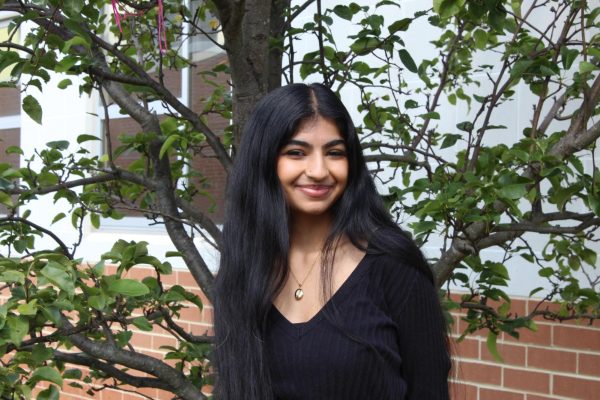

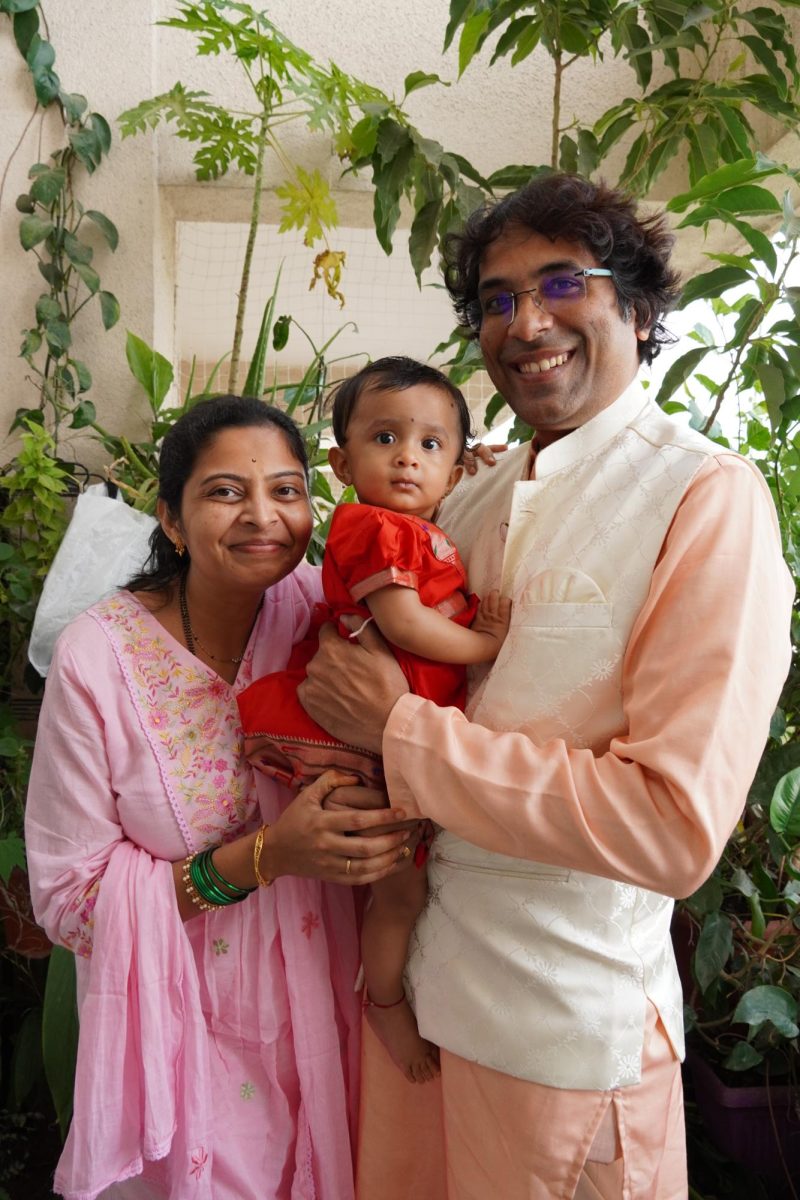
The biggest excitement this year on my annual trip to India was meeting the newest addition to my family: Mukta, a sweet newborn girl. I watched her mother, Gayatri, grow from a college student to a career woman. Finding out she was pregnant jarred me; I became deeply worried for her.
Upon meeting Gayatri and her new child, I came in with the expectation she was drowning from a lack of support, something I’ve seen plague new mothers often. In hopes of Gayatri being vulnerable with me, I asked her how motherhood was treating her, and she surprised me by replying “it is my favorite thing in the world.” At first, I didn’t believe her, but observing her lifestyle and community surrounding her quickly proved me wrong.
I stayed at her house for a while and watched Mukta live in the arms of many. If Gayatri felt too tired to feed her, her husband would step in. If he was too tired, his mother, father or grandmother would step in. I witnessed multiple people cooking, cleaning and changing the baby. The weight of motherhood was dispersed among multiple people, each one fulfilling their responsibility of supporting Gayatri in this new part of her life. Seeing this helped me understand why Gayatri could fully enjoy her journey of motherhood: she had a village.
I was embarrassed by my assumption that motherhood was burdening her. I thought to myself: why had motherhood, which used to be glorified as a kid playing family with my dolls, become a disease in my head? Where did I get the idea that Gayatri is sick, that she needs to be saved?
I understood what it was: It was the silent stories of mothers in America.
It is the story of my friend’s mother, who was forced to go back to work in her retail job after splitting her body apart, bleeding in the aisles of her 9-5. It is every pregnant teacher in Montgomery County, being forced to use their sick leave instead of being granted maternity leave.
It is black mothers having double the rate of maternal mortality than white mothers, facing the risk of medical negligence because of institutional racism. It was my own mother having to raise two children without a village, facing the harsh world of isolation America brought her.
It is every girl shamed by her community to carry her child to term, only to understand she will receive no support after the baby is born. It is all the single mothers who balance the cost of living with the time spent with their child.
These stories that ache me were the stories that shaped my reality of motherhood: a reality that infuriates me, a reality that frightens me.
There is deep irony to it: we live in a country which prides itself on being a big, beautiful and progressive nation, but when it comes to women’s healthcare, we have the highest maternal mortality rate of industrialized countries, a rate which is steadily increasing. A truth swept under the rug: the majority of these deaths are preventable. No woman has the luxury to depend on our government to support them, which is why it is our duty as a society to take the initiative.
When we lost our village, we lost the one thing that held us together: a community of support. There must be an amount of empathy restored in all of us to combat this frightening reality. With each kind gesture, each helping hand, you are bridging the large gap of isolation, the same gap my mother had to navigate as a new mother. In order for mothers to feel supported, we must change our understanding, our intentions and strive to be better for them. Because the truth is, every mother doesn’t just need a village: they deeply, deeply deserve it.