

Many teachers didn’t start their careers expecting to end up in a high school classroom. Long before they were grading essays or explaining concepts, their jobs ranged from lifeguarding or nonprofit work to academic research. Those early careers may have looked different from teaching on the surface, but they ended up shaping the way they teach today.
One teacher’s early job required creating structure, keeping people safe and staying calm under pressure, long before lesson plans were involved.
“I was a lifeguard and swim coach,” social studies teacher Jeremy Butler said.
That role demanded real-time awareness and the ability to plan and lead with confidence. It also introduced the idea of breaking down skills step by step, something that translated naturally into teaching later on.
Another teacher’s first job involved guiding students through one of the most politically important cities in the country.
“I worked at the Close Up Foundation. It brought students from all over the country to Washington, D.C. for a week and I was their teacher/tour guide for the time they were here,” social studies teacher Elizabeth Muehl said.
Leading groups through the city meant working with teenagers in a real-world setting rather than a classroom. It required constant organization while keeping students engaged in something larger than a textbook, something that still defines how history reaches students today.
Some teachers started in academic environments far before working with high schoolers.
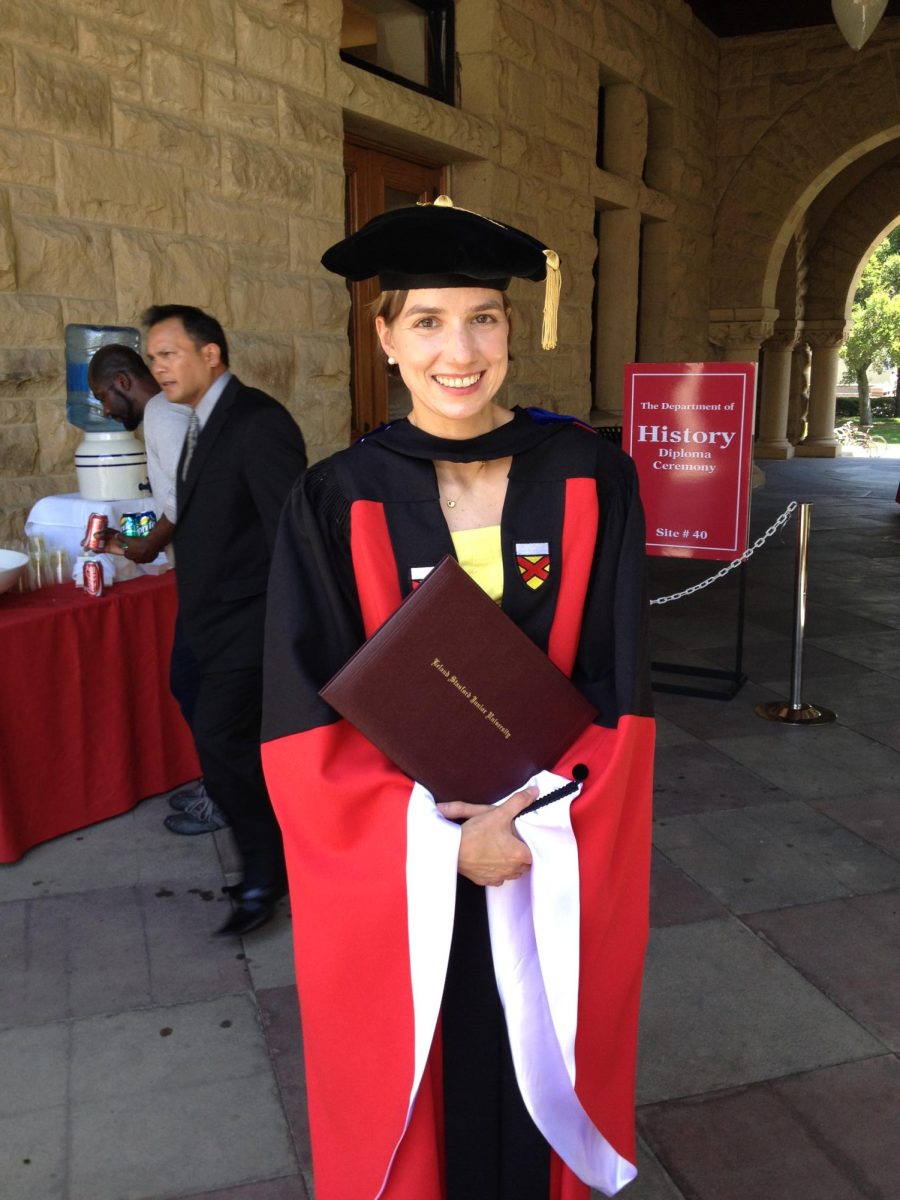
“My first job was [being] a research assistant at an economic think tank downtown,” social studies Katharina Matro said. “I thought I wanted to be an Economics Professor.”
That experience demanded precision and accountability, with work that would directly influence professional research and high-level discussions. Knowledge alone was not enough; it had to be communicated clearly and responsibly.
“I actually went to grad school [later] to become a history professor. So mainly research and teaching were always what I wanted to do,” Matro said. “I guess I thought I’d be teaching at the university level and that maybe my job would mean more research on a daily basis.”
For others, their first job was rooted in community service rather than academia or coaching.
“My first full-time job was with AmeriCorps. I worked in an office at a community health nonprofit in Fall River, Massachusetts,” social studies teacher Sophie Fierst said.
That role involved coordinating projects, meeting community needs and learning how to adapt constantly, which is what teachers do daily, even if most students never see it happening behind the scenes.
The decision to move into teaching rarely came from frustration, instead, it came from energy.
“I found working with kids rewarding,” Butler said.
That feeling of seeing understanding happen in real time was what made the switch feel meaningful, not just logical. It didn’t feel like a downgrade or a backup plan, but like the moment something finally clicked into alignment.
That same realization came from witnessing learning come to life outside strict academic circles.
“Working closely with high school students… helped me realize I like the age group, the energy and bringing subjects like U.S. government to life,” Muehl said.
It wasn’t the material that made the change worth it to her, it was the people. Teaching didn’t feel theoretical anymore. It felt urgent, human and relevant.
For some, the moment they knew they loved being a teacher came while teaching students who were not studying the subject by choice.
“I had a very diverse set of students… and my challenge was to make them love history and to think like historians,” Matro said. “We had great conversations in that class.”
That was when teaching became more than delivering information; it became an intellectual connection. It became persuasion, translation and storytelling.
“I had a side job as an SAT/ACT tutor. That’s what got me into teaching,” Fierst said.
Once their day-to-day life started to include teaching, the pull became impossible to ignore, even if it was only part-time.
The transition from job to job wasn’t always smooth. The biggest adjustment wasn’t the content; it was pressure.
“[I had difficulty] choosing an age and subject to teach, learning how to manage a classroom full of kids, [where] not all of [them] want[ed] to be there,” Butler said.
Unlike many careers, teaching doesn’t allow for an off day. Once the bell rings, everything depends on immediate effectiveness, whether or not the teacher feels fully ready.
There were also moments of outside judgment, especially for those coming from academia.
“Some people reacted like I was doing a ‘lesser’ thing,” Matro said. “Somehow now by virtue of having decided to teach 17-year-olds rather than 19-year-olds, I was worth less?”
That kind of misplaced hierarchy made the switch more difficult than it needed to be. But over time, the work itself proved greater than the perception.
Looking back, none of them regret it.
“I would still take the same career path,” Fierst said.