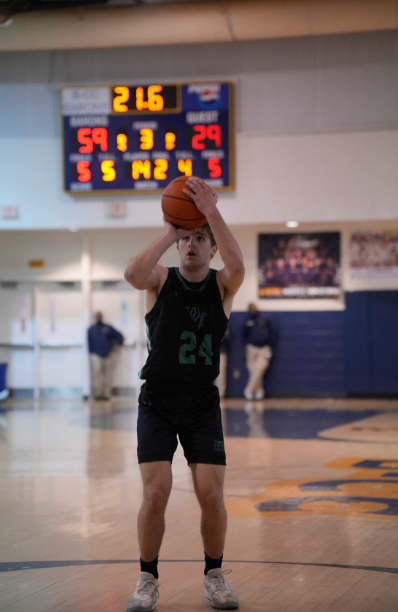

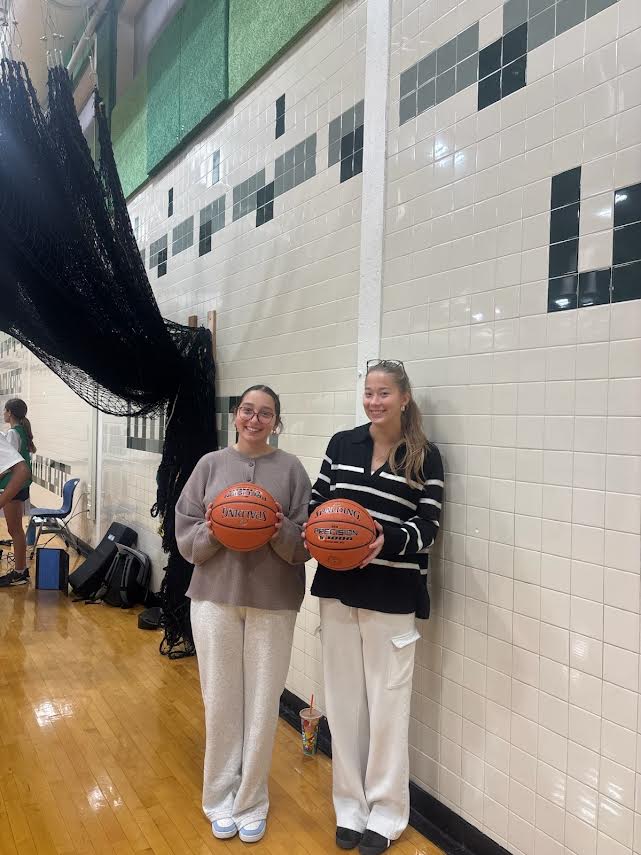
Under the stadium lights, with fans’ cheers echoing through the bleachers, players take their positions, locked in for game time. But behind every team’s success are the people working quietly in the background: student managers. From filling up water jugs to tracking stats and organizing equipment, student managers play an essential role in keeping things running smoothly.
At Walter Johnson, student managers are the backbone of many sports programs. They handle responsibilities that coaches and athletes often do not have time for, ensuring that practices and games flow efficiently.
“I get their water and med kits ready for games,” senior Maamae Padu-Asiamah, who has managed the football team for three years, said. “Game days are exciting but nerve-racking. Everyone’s locked in and there’s a lot of pressure.”
That pressure can come with challenges, especially when things do not go as planned. Padu-Asiamah explained that last-minute chaos is common.
“Sometimes they wouldn’t have their stuff ready, or they’d come to get taped four minutes before the bus was leaving. It puts pressure on me, but I just do it,” Padu-Asiamah said.
For some managers, the hardest part is the stress. For others, it is learning the ropes of a new sport.
“I wasn’t too familiar with field hockey at first,” junior Luke Notaro, manager for the girls’ field hockey team, said. “It took some time to pick up on the rules and learn what to do, but it’s been fun.”
Still, despite the long hours, student managers form strong connections with their teams. Many say the relationships are the best part of the job.
“I get along with most of the players and coaches. The coaches are great,” said Padu-Asiamah. “I love being on the sidelines and getting to experience the games up close.”
Freshman Nico Vera, a first-year manager for boys’ soccer, echoed that feeling.
“It’s very intense and taken seriously,” he said. “I just like helping the team. Everyone’s friendly and respectful.”
However, not all managers feel they get the appreciation they deserve.
“People sometimes call me the water girl,” Padu-Asiamah said. “I’m not the water girl, I’m the manager. There’s a big difference.”
Notaro agreed that recognition can be limited.
“I wouldn’t say I deserve credit for the team’s success,” he said. “But managers definitely help things run better.”
So why do they do it? For most, it’s about being part of something bigger than themselves.
“Just being with the team and seeing my friends win is great,” Notaro said.
Others enjoy the experience, the lessons in organization, and the sense of community that comes with the role.
Student managers may not add to the scoreboard, but their contributions on the sidelines are vital. They are the silent supporters who help keep every team together, proving that although success is measured on the scoreboard, it’s built behind the scenes.