

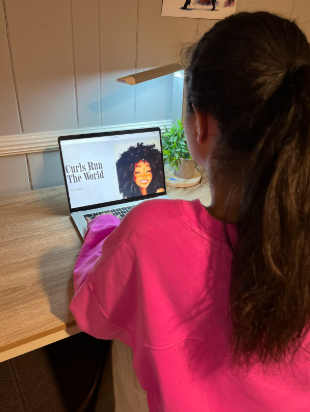
Last year in Journalism 1 we spent every Friday writing personal blogs. At first, it felt like another assignment, but posting my work for other journalism students to critique quickly became one of the few moments in school when I felt genuinely curious again. In my previous article I argued that school often kills curiosity, yet this project did the opposite. It reminded me what learning feels like when it’s driven by my own questions instead of someone else’s checklist.
Creating a blog reflects the approach of Richard Feynman, one of the most influential physicists of the twentieth century and a Nobel Prize winner known for making complicated ideas understandable. Feynman believed that the highest form of understanding is being able to teach something clearly. When you write a blog, that is exactly what you are doing. You explain an idea in writing to someone else, and the moment you try, every gap in your own understanding becomes apparent. That is where the real learning starts.
Creating my blog pushed me to become more independent, more disciplined, and more honest about what I did not know. There were no step by step instructions. If I wanted an answer, I had to find it on my own. That process sparked creativity and curiosity in a way that traditional assignments never could. By the end of the year, the project had become a personal journey for growth and reflection, and it left me with a conclusion I still believe today: students, teachers and parents should write a blog about something that genuinely excites them.
My blog, Elijah’s Pursuit of Understanding, came from realizing how many things in my daily life I experience or use but do not actually understand in terms of how they work. So I began exploring those questions. I wrote about dreams and the subconscious. I explored the Monty Hall Problem, which changed the way I thought about logic and probability. Then I went into quantum computing and how it’s shaping our world. To understand even the basics of quantum computing was a long and tedious process. I first had to learn quantum mechanics, how classical computers work, and what encryption really is. That single topic turned into hours of research and proved Feynman’s point. When you try to explain something simply, you cannot hide behind a false pretense of understanding.
This year my goal is to keep the blog going for myself and for anyone who shares the same interest in understanding how things work. I want to expand beyond broad topics about the world and its mysteries, as I’m drawn to poker, philosophy, Greek mythology, economics, cinematography, and DJing. Poker helps me read situations, evaluate possibilities, and reflect on the reasoning behind my own decisions. Philosophy challenges my assumptions. Mythology shows how people have always tried to explain the world. Writing brings all of these interests together.
We live in a digital age where it is easy to scroll for hours and think we learned something when we really did not. Passively consuming information doesn’t create learning. The act of creating a blog requires in-depth research in order to create learning for the people who read it. Writing a blog makes you slow down, focus, and think in full sentences. It pushes you to move past surface-level knowledge and actually understand what you are writing about. This habit is becoming rare, which is why it is more important than ever in today’s society.
A blog does not need a huge audience to be successful. It’s about building the habit of learning for its own sake. Information today is unlimited, but curiosity is not. Writing is one of the strongest ways to keep curiosity alive. When you write, you are not just taking in knowledge. You are creating your own understanding. And that changes you far more than scrolling and passive learning ever will.